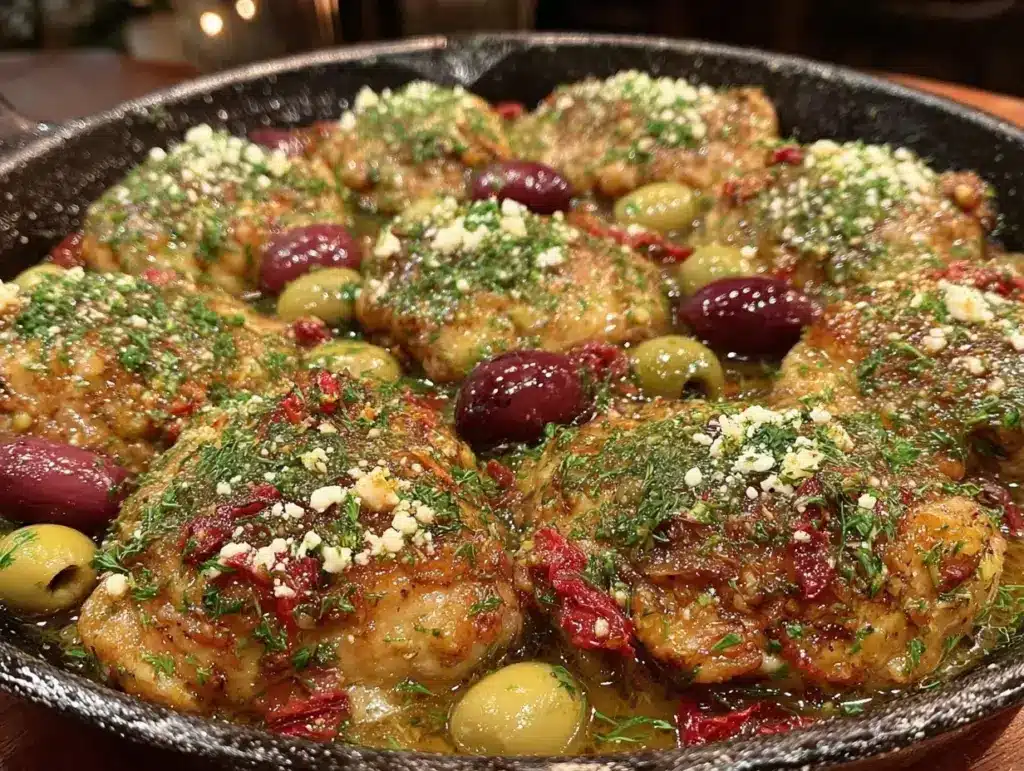
Let’s be real for a second. The concept of a “Mediterranean diet” usually involves expensive olive oil, fancy cheeses, and a level of relaxation I definitely do not have on a Tuesday at 5:30 PM. But last month, I was staring into my fridge, half-expecting to find another wilted carrot or a sad, lonely lemon, when I decided to stop overthinking dinner. I didn’t have time for a fancy marinade. I didn’t want to order takeout and pay $25 for food that would arrive lukewarm. So, I threw together what I now call my Mediterranean Chicken Skillet with Olives and Feta.
It started as a “make-do” meal. I had chicken thighs on sale, a jar of olives that had been sitting in the back of the pantry for six months, and a block of feta that needed to be used before it turned into a rock. I slapped it all into one skillet with some garlic and a splash of lemon juice. I expected something okay. Maybe a little salty. What I got was dinner that tasted like I’d actually taken a weekend trip to Greece. My kids, who usually negotiate with me over whether broccoli is a “vegetable” or a “punishment,” ate three bites and asked for seconds. No tricks. No hidden veggie purees. Just good, honest food.
This Mediterranean Chicken Skillet with Olives and Feta for Weeknights has become my secret weapon. It’s the kind of meal that feels fancy enough to serve guests but simple enough to throw together while helping with homework. It’s salty, tangy, and deeply satisfying without costing a fortune. I’ve made this at least ten times in the last three months, and every single time, it saves my evening. If you’re tired of the same old chicken breast routine, trust me on this one.
Why You’ll Love This Recipe
There are about a dozen reasons I keep coming back to this skillet, but if you’re a busy parent trying to keep dinner costs down while keeping the peace at the table, these are the big ones:
- Stupid Simple Cleanup — Seriously, it’s one pan. If you can brown chicken and dump ingredients into a skillet, you can make this. I’ve made this while my toddler was climbing on my back. It’s that easy.
- Under $15 for the Whole Family — Chicken thighs on sale, basic pantry spices, and a small amount of feta (because it’s potent, so you don’t need much) keeps this well within budget. It’s cheaper than a single meal at a casual restaurant.
- Flavor That Wakes Up Your Taste Buds — Most weeknight dinners are bland because we’re afraid of seasoning. The olives and feta bring that salty, briny kick that makes even plain rice or crusty bread taste incredible. It’s like a flavor bomb in every bite.
- Kid-Approved (Mostly) — My picky eater loves the juicy chicken. The olives? Well, they have to pick those out, but they don’t complain about the rest. If you’re worried about the kids rejecting olives, just chop them fine or skip them for their plates. The sauce is universally loved.
- Great for Meal Prep — This actually tastes better the next day. The flavors meld together overnight. I make a double batch on Sunday, and it’s my go-to lunch for Wednesday. It reheats beautifully in the microwave or on the stove.
This is my go-to when I need dinner to just work. No complicated techniques, no weird ingredients you have to order online, just reliable, delicious food that makes everyone happy. And honestly? It’s a great way to use up that crispy garlic parmesan smashed potatoes recipe if you want to turn this into a full feast.
Ingredients You’ll Need
Here’s the best part: you probably have most of this already. This isn’t a recipe that requires a trip to three different specialty stores. It’s built on pantry staples and affordable basics.
For the Chicken Base
Chicken thighs (1.5 lbs / 680g) — Boneless, skinless. I always choose thighs over breasts for this. Breasts get dry and boring in a skillet like this. Thighs stay juicy and can handle the simmering without falling apart. Look for sales; they’re usually cheaper anyway.
Chicken broth (½ cup / 120ml) — Low-sodium is best here because the olives and feta are already salty. I use whatever brand is on sale, but make sure it’s not the “fat-free” kind; you want some flavor.
Garlic (4 cloves, minced) — Fresh garlic is non-negotiable. Jarred garlic has a weird metallic taste that clashes with the fresh lemon. If you’re lazy, use pre-peeled cloves from the produce section, but mince them yourself. It takes 30 seconds.
Olive oil (2 tablespoons) — Use your standard extra virgin olive oil for cooking. You don’t need the fancy stuff you drizzle on salads at the end. Just good, reliable oil.
For the Flavor Profile
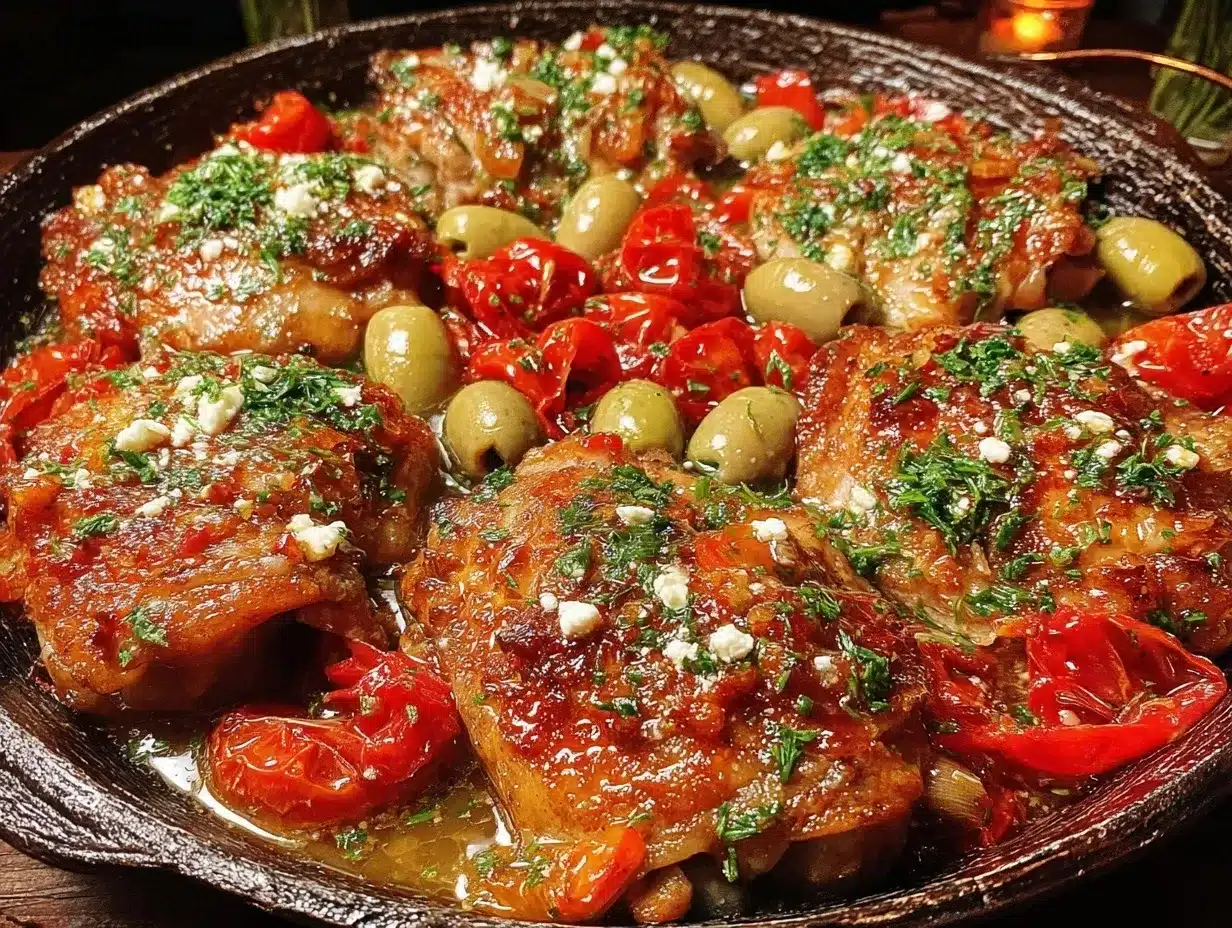
Kalamata olives (½ cup, pitted and halved) — These are the classic Mediterranean olive. They’re meaty and salty. Green olives work too, but Kalamata gives that deeper, richer flavor. If you can’t find Kalamata, black olives are a fallback, but they’re milder.
Feta cheese (½ cup, crumbled) — Buy a block and crumble it yourself. Pre-crumbled feta in a bag is coated in potato starch to keep it from clumping, which makes it grainy and less melty. A block tastes fresher and melts better. You don’t need a lot; it’s strong stuff.
Dried oregano (1 teaspoon) — The backbone of Mediterranean flavor. Don’t skip it. If you don’t have it, dried basil or Italian seasoning works, but oregano is the real deal here.
Lemon juice (2 tablespoons, fresh) — Bottled lemon juice tastes like cleaner fluid. Squeeze a fresh lemon. If you have a lemon that’s been sitting in the fruit bowl for a week, roll it on the counter before cutting to get more juice out.
Red pepper flakes (½ teaspoon, optional) — Just a pinch. It adds a tiny warmth that balances the saltiness of the cheese. If your family hates spice, leave it out, but I think it’s worth it.
For Serving (Optional but Recommended)
Fresh parsley (2 tablespoons, chopped) — Adds color and a fresh bite. It makes the dish look like you actually tried. I buy a bunch, chop it all up, and keep it in a bag in the fridge. It lasts forever.
Couscous or crusty bread — You need something to soak up that amazing sauce. I usually keep instant couscous on hand because it cooks in 5 minutes. Or just grab a loaf of cheap French bread.
Equipment Needed
You don’t need fancy equipment for this. Here’s what I actually use:
Large skillet or frying pan — 12-inch is ideal. I use a stainless steel skillet because it gets a good sear on the chicken. Cast iron works great too, but make sure it’s well-seasoned so the chicken doesn’t stick. Non-stick is fine if that’s what you have, but you won’t get that nice brown crust.
Wooden spoon or spatula — For stirring and deglazing the pan. You want to scrape up those brown bits from the bottom of the pan; that’s where the flavor is.
Cutting board and knife — Standard stuff. Sharp knife makes mincing garlic easier.
Measuring spoons — For the oregano and lemon juice. I eyeball the rest, but measuring the spices ensures it’s consistent.
Zester or grater — Optional. If you want to add lemon zest, you’ll need this. It adds a huge boost of aroma without extra liquid.
How to Make It: Step-by-Step
Alright, let’s make this! I’m walking you through exactly how I do it, including the little tricks I’ve picked up so you don’t burn the garlic.
Step 1: Prep the Chicken (5 minutes)
Pat your chicken thighs dry with paper towels. This is crucial. If they’re wet, they’ll steam instead of sear. Season them generously with salt and pepper on both sides. I use about ½ teaspoon of salt total for the chicken. Set them aside while you chop your olives and mince your garlic. Having everything ready before you turn on the heat makes cooking stress-free.
Step 2: Sear the Chicken (6-8 minutes)
Heat the olive oil in your large skillet over medium-high heat. Once the oil shimmers, add the chicken thighs in a single layer. Don’t crowd the pan. If your skillet is small, do this in two batches. Sear for 3-4 minutes on one side without moving them. You want a nice golden-brown crust. Flip and cook for another 3-4 minutes until cooked through (internal temp of 165°F / 74°C). Remove the chicken from the pan and set it aside on a plate. Don’t clean the pan; leave those brown bits!
Step 3: Build the Sauce (3 minutes)
Reduce the heat to medium. Add the minced garlic and dried oregano to the same skillet. Stir constantly for about 30 seconds until fragrant. Be careful not to burn the garlic—it turns bitter fast. Pour in the chicken broth and lemon juice. Use your wooden spoon to scrape up all the brown bits from the bottom of the pan. This is called deglazing, and it adds so much flavor to the sauce.
Step 4: Simmer and Combine (5 minutes)
Let the sauce simmer for 2-3 minutes to reduce slightly. It should thicken a little, but it will still be liquidy. Add the halved olives and stir them in. Let them heat through for a minute. Now, add the chicken back into the pan, nestling it into the sauce. Spoon some of the sauce over the top of the chicken. Sprinkle the crumbled feta cheese evenly over everything.
Step 5: Melt and Serve (2 minutes)
Turn off the heat. Cover the pan with a lid (or a large plate if you don’t have a lid) for 1-2 minutes. The residual heat will melt the feta into a creamy, salty sauce. If you like it spicy, sprinkle the red pepper flakes on now. Garnish with fresh parsley. Serve immediately with couscous, rice, or crusty bread to soak up every drop of sauce.
Total Time: About 25 minutes (5 minutes prep, 20 minutes cooking).
Expert Tips & Tricks
Here’s everything I’ve learned from making this dozens of times. These tips will save you from my mistakes.
Don’t Overcook the Chicken — Chicken thighs are forgiving, but they can still dry out if you cook them too long. Use a meat thermometer if you have one. 165°F is the target. If you don’t have one, cut into the thickest part; the juices should run clear, not pink.
Balance the Salt — Olives and feta are both very salty. Taste your sauce before adding extra salt to the chicken. I usually find that the chicken doesn’t need much salt if I’m using a lot of olives. Start with less, taste, and add more if needed.
Use the Pan Scrapings — That brown stuff stuck to the bottom of the pan? That’s called *fond* in French cooking, and it’s pure flavor gold. Don’t wash it away. Deglaze with the broth to lift it all into the sauce.
Feta Variations — If feta is too expensive or you can’t find it, goat cheese works well too. It’s tangy and creamy, though milder. Halloumi is another option if you want a firmer cheese that doesn’t melt completely.
Double the Batch — This recipe doubles easily. Just use a larger skillet or two pans. It’s perfect for meal prep because the flavors get even better after sitting in the fridge overnight. I often make double batches on Sundays and portion them out for lunches.
Variations & Substitutions
Once you’ve nailed the basic version, here’s how you can mix it up. I’ve tried all of these.
Veggie-Loaded — Add 1 cup of chopped bell peppers or zucchini when you sauté the garlic. Cook them for 2-3 minutes before adding the broth. It adds bulk and nutrients without changing the flavor profile much. This is how I sneak extra veggies onto my kids’ plates.
Shrimp Swap — You can use shrimp instead of chicken. Sear them for just 2 minutes per side, then remove. Add them back at the end with the olives and feta. Shrimp cooks faster, so be careful not to overcook it. This is similar to my creamy Tuscan shrimp skillet, but lighter and tangier.
Herbaceous — Swap the oregano for fresh basil or thyme. Add fresh herbs at the end for a brighter flavor. This works well if you have a herb garden or a bunch of fresh herbs about to wilt.
Spicy Kick — Add a diced jalapeño with the garlic. Or use spicy Italian sausage instead of chicken for a completely different vibe. The feta cools down the heat nicely.
Gluten-Free — This recipe is naturally gluten-free as long as you use gluten-free broth and serve it with rice or potatoes instead of couscous. Double-check your olive and feta labels to ensure no hidden gluten, though it’s rare.
Serving & Storage
How to Serve: I usually serve this straight from the skillet at the dinner table—it looks rustic and stays warm. But here are other ways I’ve enjoyed it:
- Over Couscous or Quinoa: The grains soak up the salty sauce perfectly. Quinoa adds a nice nutty texture.
- With Crusty Bread: Tear up a baguette and dip it in the sauce. It’s like eating a Mediterranean pizza topping.
- Over Rice: White rice or brown rice both work. I prefer brown rice for the extra fiber.
Storage Instructions:
Refrigerator: Store in an airtight container for up to 4 days. The sauce will thicken in the fridge—totally normal. The feta solidifies a bit.
Reheating: Best method: Add to a skillet with a splash of chicken broth or water over low heat. Stir until heated through and creamy again. The liquid helps loosen the sauce. Microwave method: Heat in 30-second intervals, stirring between. Add a splash of water if it’s too thick.
Freezing: Honestly, this doesn’t freeze well because of the dairy. The feta can become grainy and separate when thawed. The olives and chicken freeze fine, but the sauce texture suffers. I recommend making it fresh or storing in the fridge for up to 4 days.
Nutrition Information
I’m not a nutritionist, but here’s the breakdown if you’re tracking. This is per serving (based on 4 servings, served with couscous).
| Nutrient | Amount |
|---|---|
| Calories | 450 |
| Protein | 35g |
| Carbs | 25g |
| Fat | 22g |
| Sodium | 850mg |
What’s Good: High protein from the chicken. Good fats from the olive oil. It’s a balanced meal.
What to Know: Higher in sodium due to olives and feta. If you’re watching salt, rinse the olives before using and use less feta. It’s comfort food, but it’s not junk food. It’s real, whole ingredients.
Final Thoughts
So that’s my go-to Mediterranean Chicken Skillet with Olives and Feta! I’ve probably talked your ear off at this point, but when you make a recipe this often, you have a lot to say about it. This has saved weeknight dinners more times than I can count. It’s my answer to “what’s for dinner” when I’m tired, don’t want takeout, and still want something that tastes really good. My kids are happy, my husband’s happy, and I’m happy because I’m not stressed about cooking.
Make it yours! Try different add-ins, swap in your favorite vegetables, adjust the spice level. The best recipes are the ones you adapt to your family’s tastes. If you make this, drop a comment and let me know what you think! I love hearing how recipes turn out in your kitchen. And if something doesn’t work, tell me that too—I’m here to help troubleshoot.
Happy cooking! And I hope your kitchen smells half as good as mine does right now.
Frequently Asked Questions
Can I use chicken breasts instead of thighs?
You can, but they will be less juicy. Chicken breasts cook faster and dry out easily in a skillet sauce. If you use breasts, reduce the cooking time by 2-3 minutes and keep a close eye on them. Thighs are just more forgiving for this type of recipe.
My sauce is too salty—what happened?
This usually happens if you use pre-salted olives or a lot of feta. To fix it, add a splash of water or unsalted broth to dilute the sauce. You can also add a squeeze of fresh lemon juice, which helps balance the saltiness with acidity.
Can I make this ahead for a dinner party?
Sort of. You can prep the chicken and chop the olives ahead of time. Cook the chicken and sauce right before serving. The feta melts best when fresh. If you make it too far in advance, the cheese will clump up again when reheated.
Why did my sauce separate?
If you boiled the sauce after adding the feta, the cheese can break. Always turn off the heat before adding the cheese, or use residual heat to melt it. Gentle heat is key for creamy sauces.
Can I freeze this?
I don’t recommend it. The feta sauce doesn’t freeze well. It becomes grainy and separates. The chicken and olives freeze fine, but the texture of the sauce suffers. It’s best made fresh.
What can I serve with this?
Couscous, rice, quinoa, or crusty bread are all great options. A simple green salad with lemon vinaigrette also pairs nicely to cut through the richness of the cheese.
Pin This Recipe!
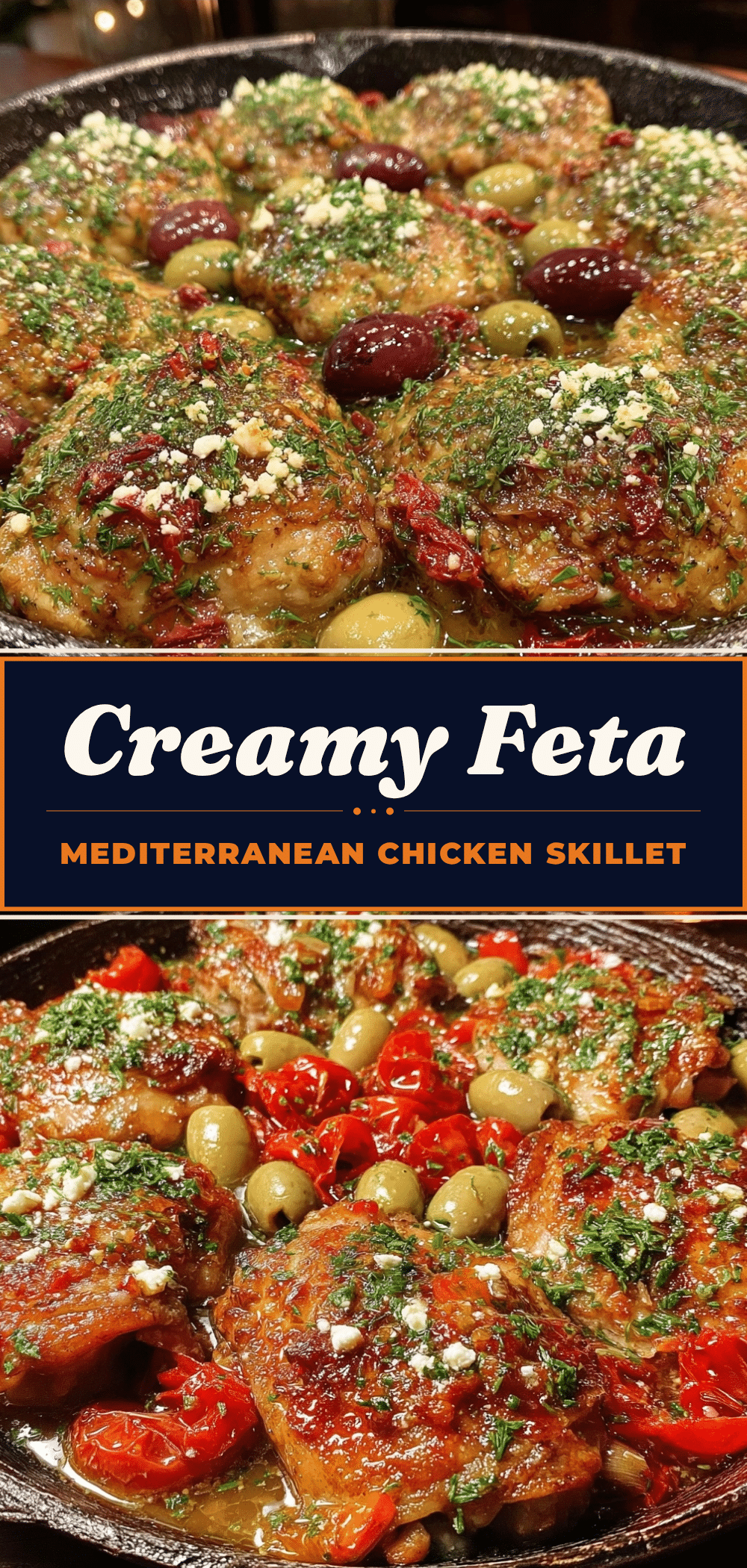

Mediterranean Chicken Skillet with Olives and Feta
- Total Time: 25 minutes
- Yield: 4 servings 1x
Description
A simple, one-pan weeknight dinner featuring juicy chicken thighs, salty Kalamata olives, and tangy feta cheese, ready in under 30 minutes.
Ingredients
- 1.5 lbs boneless, skinless chicken thighs
- 2 tablespoons extra virgin olive oil
- 4 cloves garlic, minced
- 1 teaspoon dried oregano
- 1/2 cup low-sodium chicken broth
- 2 tablespoons fresh lemon juice
- 1/2 cup Kalamata olives, pitted and halved
- 1/2 cup feta cheese, crumbled
- 1/2 teaspoon red pepper flakes (optional)
- 2 tablespoons fresh parsley, chopped (for garnish)
- Salt and black pepper to taste
Instructions
- Pat chicken thighs dry with paper towels and season generously with salt and pepper.
- Heat olive oil in a large skillet over medium-high heat. Sear chicken thighs for 3-4 minutes per side until golden brown and cooked through (165°F). Remove chicken and set aside.
- Reduce heat to medium. Add minced garlic and dried oregano to the skillet; stir for 30 seconds until fragrant.
- Pour in chicken broth and lemon juice, scraping up brown bits from the bottom of the pan.
- Simmer sauce for 2-3 minutes until slightly thickened. Add olives and stir to heat through.
- Return chicken to the skillet, nestling it into the sauce. Spoon sauce over the chicken.
- Sprinkle crumbled feta cheese evenly over the chicken and olives.
- Turn off heat, cover with a lid, and let sit for 1-2 minutes to allow feta to melt into a creamy sauce.
- Garnish with fresh parsley and red pepper flakes if desired. Serve immediately with couscous, rice, or crusty bread.
Notes
Chicken thighs are preferred over breasts for juiciness. Do not boil the sauce after adding feta to prevent separation; use residual heat to melt the cheese. This dish does not freeze well due to the dairy. Rinse olives if you are watching sodium intake.
- Prep Time: 5 minutes
- Cook Time: 20 minutes
- Category: Main Course
- Cuisine: Mediterranean
Nutrition
- Serving Size: 1 chicken thigh with
- Calories: 450
- Sugar: 2
- Sodium: 850
- Fat: 22
- Saturated Fat: 8
- Carbohydrates: 25
- Fiber: 2
- Protein: 35
Keywords: Mediterranean chicken, one pan dinner, weeknight meals, chicken thighs, olives, feta cheese, easy dinner, family friendly