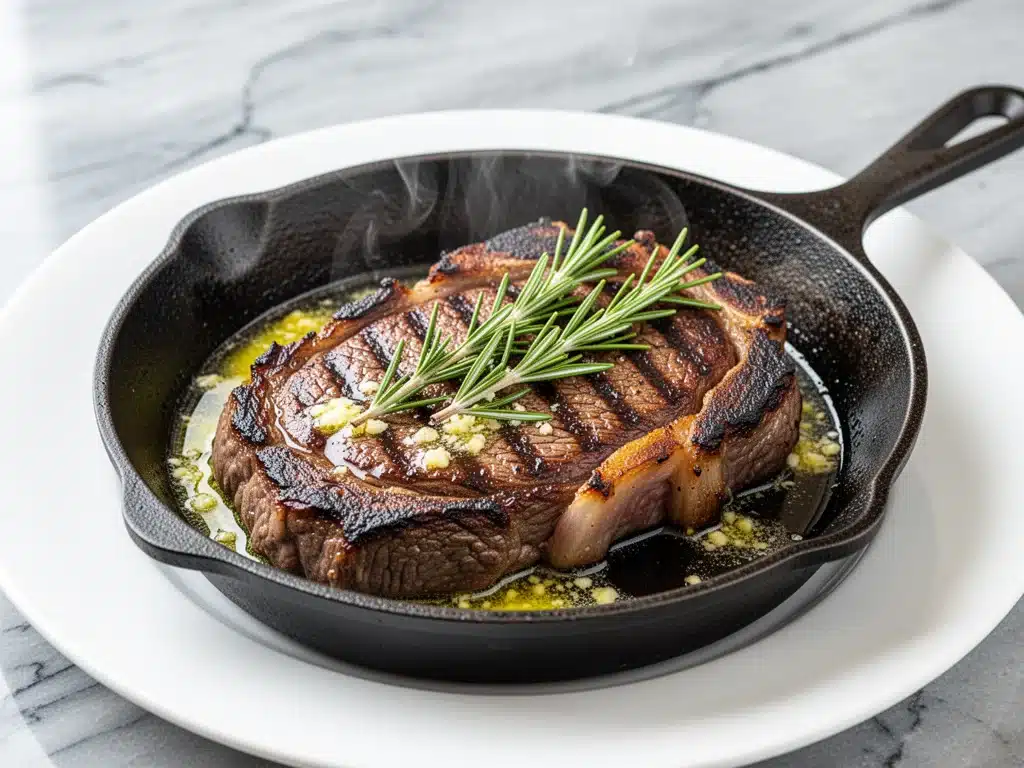
I have a confession to make. For years, I avoided cooking ribeye steak at home. Not because I didn’t love it—don’t get me wrong, I’m obsessed with a good sear—but because I was terrified of ruining an expensive cut of meat. I spent years ordering it at steakhouses, watching the waitstaff carve it tableside, thinking that skill was reserved for professionals with fancy knives and decades of experience.
Then, last Tuesday, I came home from work exhausted. It was one of those nights where the kids were crying, the dog was barking at a leaf, and the last thing I wanted to do was stand over a stove. But I had this gorgeous, marbled ribeye in the freezer that needed to be used before it spoiled. I didn’t want takeout. I wanted comfort. I wanted something that felt special but required zero brainpower.
So I grabbed my oldest, most seasoned cast iron skillet and threw together a garlic butter sauce. I didn’t have a recipe. I just threw in butter, a whole head of garlic, and some thyme from the window box. What came out of that pan wasn’t just dinner; it was a revelation. The steak was tender, the garlic butter pooled at the bottom like liquid gold, and it took less time than it would have to wait for a delivery driver.
That night changed everything. I’ve made this Cast Iron Garlic Butter Ribeye at least ten times since. It’s become my go-to weeknight meal when I need to impress myself (and my family) without spending hours in the kitchen. It’s rich, it’s savory, and it’s stupidly simple. If you’ve been intimidated by cooking steak, this is the one that will win you over. Trust me. You don’t need to be a chef to make restaurant-quality dinner at home.
Why You’ll Love This Garlic Butter Ribeye Recipe
There are about a dozen reasons I keep coming back to this skillet steak method, but let’s be real about the big ones. This isn’t just another steak recipe; it’s a game-changer for busy weeknights when you want to eat well but have limited energy.
It’s Actually Fast — Seriously. From the moment you take the steak out of the fridge to the moment you’re sitting down with a fork, it’s about 20 minutes. Most of that time is just waiting for the pan to heat up or the meat to rest. You’re only actively cooking for maybe 8-10 minutes. I’ve made this on nights when I walked in the door at 7:30 pm and had dinner on the table by 8:00.
One Pan Wonder — Cleanup is the enemy of good cooking, right? With this method, you only use one skillet. The garlic butter sauce stays in the pan, the steak cooks in the pan, and you serve it right out of the pan. No extra bowls, no extra pots. It’s the kind of easy dinner that makes you want to cook again tomorrow.
Flavor Bomb — This isn’t just salt and pepper steak. The garlic butter sauce transforms a simple cut of beef into something luxurious. The butter bastes the meat as it cooks, keeping it incredibly juicy, while the garlic and herbs infuse every bite. It’s rich without being heavy, and it pairs perfectly with almost any side dish. If you love the garlic butter baked salmon we make for fish night, you’re going to be in heaven with this beef version.
Impressive but Simple — I’ve served this to friends who think they know everything about steak, and they were genuinely impressed. They asked for the recipe, thinking I’d hired a sous chef. Nope. Just me, a cast iron skillet, and some butter. It makes you feel like a pro without the stress.
Budget-Friendly Luxury — Sure, ribeye isn’t the cheapest cut, but you only need one or two steaks for dinner. Compared to taking the family out to a steakhouse where one entrée runs $35+, cooking this at home saves you a fortune while still feeling like a treat. Plus, you control the quality of the meat.
This recipe is my answer to “what’s for dinner?” when I’m tired but don’t want to settle for leftovers. It’s reliable, delicious, and makes everyone at the table happy.
Ingredients You’ll Need for Perfect Steak
Here’s the good news: this recipe relies on high-quality ingredients, but the list is short. You probably have most of this already. The secret isn’t in a long list of spices; it’s in the technique and the butter.
For the Steaks
Ribeye Steaks (2 steaks, about 1 to 1.5 inches thick) — This is non-negotiable. Ribeye has that beautiful marbling that keeps it juicy. You can use strip steak or filet mignon, but ribeye is the king of flavor here. Ask your butcher to trim the excess fat, but leave a little rim—it adds flavor. Let them come to room temperature before cooking (I’ll explain why later).
Kosher Salt (1 teaspoon) — I use kosher salt because it’s easier to control than table salt. Sea salt works too. Avoid iodized table salt if you can; it can make the meat taste metallic. We need a good crust, and salt helps draw out moisture to create that sear.
Black Pepper (½ teaspoon, freshly cracked) — Freshly cracked pepper has a different aroma than pre-ground. It’s worth the 10 seconds to grind it yourself. Coarse grind looks better and tastes better.
Neutral Oil (1 tablespoon) — I use avocado oil or grapeseed oil. Olive oil has a low smoke point and will burn in the hot cast iron. You need an oil that can handle high heat without smoking up your kitchen.
For the Garlic Butter Sauce
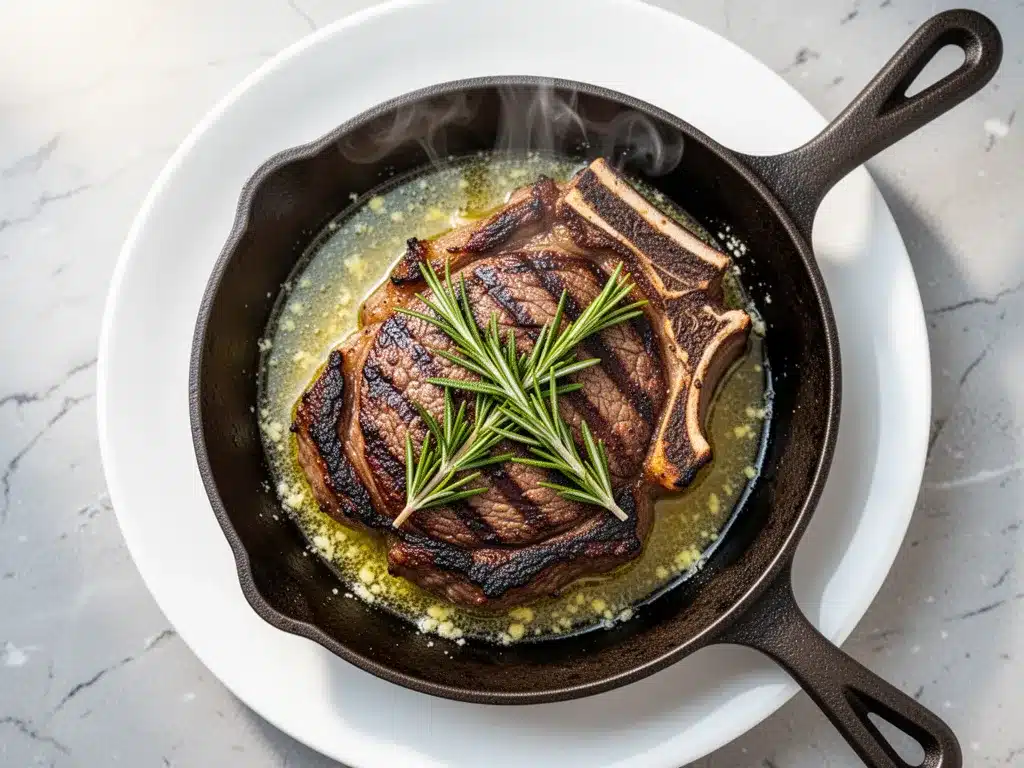
Unsalted Butter (4 tablespoons) — Use real butter. No margarine. I like to use high-quality European-style butter if I have it, but regular unsalted works fine. The butter creates the basting liquid that keeps the steak moist.
Garlic Cloves (6-8 cloves, smashed) — Yes, that many. Don’t be shy. The garlic gets soft and sweet in the butter, almost like a condiment. Smash them with the side of your knife so they release their flavor but don’t burn as quickly as minced garlic. Peeled garlic cloves are easiest.
Fresh Thyme or Rosemary (2-3 sprigs) — Thyme is my go-to because it’s subtle and earthy. Rosemary is stronger, so use less if you prefer that. Fresh herbs are best here. Dried herbs won’t give you that same aromatic punch. This pairs beautifully with the herb-infused sauces we use for seafood.
Optional: Red Pepper Flakes (Pinch) — If you like a little heat, throw in a pinch. It cuts through the richness of the butter nicely. I usually skip it on weeknights but add it when I have guests.
Pro Tip: I always keep a bag of frozen garlic cloves in the freezer. They’re pre-peeled and perfect for smashing. It saves time when I’m rushing.
Equipment You’ll Need
You don’t need a fancy kitchen to make this. Here’s what I actually use.
Cast Iron Skillet — This is the star of the show. A 10-inch or 12-inch skillet works best. Cast iron holds heat incredibly well, which is essential for getting that crusty sear on the steak. If you don’t have cast iron, a heavy stainless steel skillet works too. Avoid non-stick; you need that high heat.
Tongs — For flipping the steak. Knives can pierce the meat and let juices escape. Tongs keep the steak intact. I have a pair with silicone tips that don’t scratch my pan.
Instant-Read Thermometer — This is the biggest game-changer. Guessing doneness is stressful. A thermometer takes the guesswork out. I use a ThermoWorks or any cheap digital one from Amazon. It gives you confidence every time.
Plate or Wire Rack — For resting the steak. A plate works fine, but a wire rack over a baking sheet is better because it keeps the bottom from getting soggy. I usually just use a clean plate.
Small Spoon or Basting Spoon — For spooning the hot butter over the steak. A regular metal spoon works great.
How to Make Cast Iron Garlic Butter Ribeye
Alright, let’s get cooking. I’m walking you through exactly how I do it, including the little tricks I’ve picked up over years of practice.
Step 1: Prep the Steak (10 minutes)
Take your ribeye steaks out of the fridge about 30-45 minutes before you plan to cook. This is crucial. Cold steak hits a hot pan and the temperature drops, leading to uneven cooking. Letting it come to room temperature helps it cook evenly. Pat the steaks completely dry with paper towels. Moisture is the enemy of a good sear. If they’re wet, they’ll steam instead of sear. Season both sides generously with kosher salt and black pepper.
Step 2: Heat the Skillet (5 minutes)
Place your cast iron skillet over medium-high heat. Let it get hot. This takes about 3-5 minutes. You want the pan screaming hot. To test it, flick a few drops of water into the pan. If they sizzle and evaporate instantly, you’re ready. If they just sit there, give it more time.
Step 3: Sear the Steak (3-4 minutes per side)
Add the neutral oil to the hot pan. It should shimmer immediately. Carefully lay the steaks into the pan away from you to avoid splatter. You should hear a loud sizzle. Do not touch them for 2-3 minutes. Let them develop a deep brown crust. Flip them. The second side usually cooks a bit faster. For a 1-inch thick steak, aim for about 3-4 minutes per side for medium-rare.
How to check doneness: If you have a thermometer, insert it into the thickest part of the steak. For medium-rare, pull it off the heat at 130°F (54°C). The temperature will rise a few degrees while it rests. For medium, aim for 140°F (60°C).
Step 4: Make the Garlic Butter Sauce (2 minutes)
Once the steak is almost done, reduce the heat to medium-low. Add the butter, smashed garlic cloves, and herb sprigs to the pan. As the butter melts, tilt the pan slightly so the butter pools on one side. Use your spoon to continuously baste the steak with the hot garlic butter. This cooks the garlic gently without burning it and infuses the meat with flavor. Do this for about 1-2 minutes.
If the garlic starts to brown too quickly, remove it from the pan or lower the heat. Burnt garlic tastes bitter.
Step 5: Rest the Steak (5-10 minutes)
Transfer the steaks to a plate or cutting board. Pour the remaining garlic butter from the pan over the top. Cover loosely with foil if you want to keep them warm, but don’t seal them tight. Let them rest for at least 5 minutes. This allows the juices to redistribute. If you cut into it immediately, all that delicious juice runs out onto the plate, and the meat becomes dry. Patience pays off.
Step 6: Serve
Slice the steak against the grain. This is important for tenderness. Pour any remaining juices from the plate back over the meat. Serve immediately with the extra garlic butter on the side.
Total Time: About 25 minutes (10 minutes prep/rest, 15 minutes active cooking)
Expert Tips for Perfect Steak Every Time
Here’s everything I’ve learned from making this dozens of times. These tips will save you from my mistakes.
Don’t Skip the Rest
I know it’s tempting to eat it right away. Don’t. Resting is non-negotiable for juicy steak. The fibers in the meat relax during the rest, holding onto the juices. If you skip it, you’re serving dry meat. Set a timer. Five minutes minimum.
Smash, Don’t Mince
For the garlic, smash the cloves with the flat side of your knife. This releases the flavor oils but keeps the clove intact. Minced garlic burns instantly in hot butter. Smashed garlic gets soft and sweet, becoming almost like a edible spread for the steak.
Patience with the Sear
When you first put the steak in the pan, resist the urge to move it. You need that Maillard reaction—the chemical reaction that creates that brown, crispy crust. If you move it too early, it sticks and tears. Wait until it releases easily from the pan.
Use a Thermometer
Stop guessing. The “finger test” is unreliable and stressful. An instant-read thermometer gives you exact results every time. It’s the best $15 you’ll spend in your kitchen.
Baste Aggressively
When you add the butter, don’t just let it sit there. Spoon it over the steak constantly. This basting cooks the garlic gently and coats the steak in flavor. It’s the secret to that restaurant-style finish.
Variations and Substitutions
Once you’ve nailed the basic version, here’s how you can mix it up. I’ve tried all of these.
Filet Mignon Version
Filet is leaner than ribeye, so it needs extra care. Reduce cooking time by about 1 minute per side. The garlic butter is even more important here to keep it moist. This is a great option if you want a more tender, less chewy steak.
Steak Frites Style
Top the steak with fried shallots and a dollop of horseradish cream. Serve with crispy fries. This turns your weeknight dinner into a classic bistro meal.
Herb Crust
Mix chopped rosemary, thyme, and garlic into softened butter. Spread this compound butter on top of the steak after it rests. It melts into the meat as you serve it. Fancy but easy.
Gluten-Free
This recipe is naturally gluten-free. Just ensure your butter and any side dishes are GF. No modifications needed.
Dairy-Free
Replace the butter with ghee or avocado oil. Add the garlic and herbs to the oil for basting. It won’t have the same creamy richness, but the garlic flavor will still be there. Ghee is my favorite swap because it has a nutty flavor and a high smoke point.
Serving and Storage
How to Serve:
I usually serve this straight from the skillet or on a large platter. It looks rustic and stays warm. Here are my favorite sides:
- Mashed Potatoes: The garlic butter sauce is perfect for drizzling over creamy mashed potatoes.
- Roasted Asparagus: Simple, healthy, and matches the steak’s richness.
- Crisp Green Salad: A light vinaigrette cuts through the fat of the steak.
- Sauteed Spinach: Quick, easy, and goes with everything.
Storage:
Store leftovers in an airtight container in the fridge for up to 3 days. The steak will reheat well in a skillet over low heat with a splash of broth or water to keep it moist. Avoid the microwave if you can—it tends to make steak rubbery. If you must use the microwave, heat in 30-second intervals and cover with a damp paper towel.
Freezing:
Steak freezes well, but I don’t recommend freezing cooked steak. The texture changes, and it can become dry. Freeze the raw steaks if you need to prep ahead. Wrap them tightly in plastic wrap and then foil.
Nutrition Information
I’m not a nutritionist, but here’s the breakdown if you’re tracking. Keep in mind that nutrition varies based on the size of the steak and the exact cut.
Per Serving (1 steak with sauce):
- Calories: 650
- Protein: 45g
- Carbs: 2g
- Fat: 50g
- Saturated Fat: 20g
This is a high-protein, low-carb meal. It’s rich in healthy fats from the butter and steak. If you’re watching your saturated fat intake, you can reduce the butter to 2 tablespoons or use a lighter oil for basting. But honestly, this is a treat meal. Enjoy it!
Final Thoughts
So that’s my cast iron garlic butter ribeye! I know I’ve talked a lot about this, but when you find a recipe that works this well, you want to share it. This steak has saved my weeknight dinners more times than I can count. It’s my answer to “I’m tired but I want good food.” It’s fast, it’s flavorful, and it makes me feel like I’ve accomplished something amazing in the kitchen.
Make it yours! Try different herbs, add some chili flakes, or serve it with your favorite side. The best recipes are the ones you adapt to your tastes. If you make this, drop a comment and let me know how it turned out. I love hearing how recipes work in your real kitchens. And if something doesn’t work, tell me—I’m here to help troubleshoot.
Happy cooking! I hope your kitchen smells as good as mine does right now.
Frequently Asked Questions
Can I use a different cut of steak?
Absolutely. New York strip, filet mignon, or even T-bone work well. Just adjust cooking times based on thickness. Ribeye is preferred for its marbling, but any good cut will work with this method. If you use a leaner cut like filet, be careful not to overcook it.
Why is my steak tough?
This usually happens for two reasons: either the steak was overcooked, or you sliced it with the grain. Always slice against the grain to shorten the muscle fibers and make the steak tender. Also, ensure you’re not cooking it past medium-well if you want it juicy.
Can I make this ahead of time?
You can prep the steaks by seasoning them and letting them come to room temperature ahead of time. But the actual cooking and garlic butter sauce should be made fresh. The sauce is best when it’s hot and foamy. You can’t really make the sauce ahead and reheat it without it separating or burning.
What temperature is medium-rare?
Medium-rare is 130-135°F (54-57°C) internal temperature. Remember, the temperature will rise 5 degrees while the steak rests. So pull it off the heat at 130°F for a perfect medium-rare finish.
Do I have to use cast iron?
No, but it’s the best tool for the job. Cast iron retains heat better than most pans, which helps create a better crust. A heavy stainless steel skillet works well too. Avoid thin aluminum pans or non-stick, as they won’t get hot enough for a proper sear.
How do I prevent the butter from burning?
Burnt butter tastes bitter. To prevent this, add the butter when the steak is almost done, not at the beginning. Also, keep the heat at medium-low when basting, and remove the garlic cloves if they start to brown. The milk solids in butter burn quickly, so watch it closely.
Can I double this recipe?
You can, but don’t overcrowd the pan. Cook the steaks in batches if necessary. If you put two thick steaks in a small skillet, they’ll steam instead of sear. Use your biggest skillet and give each steak space.
Pin This Recipe!
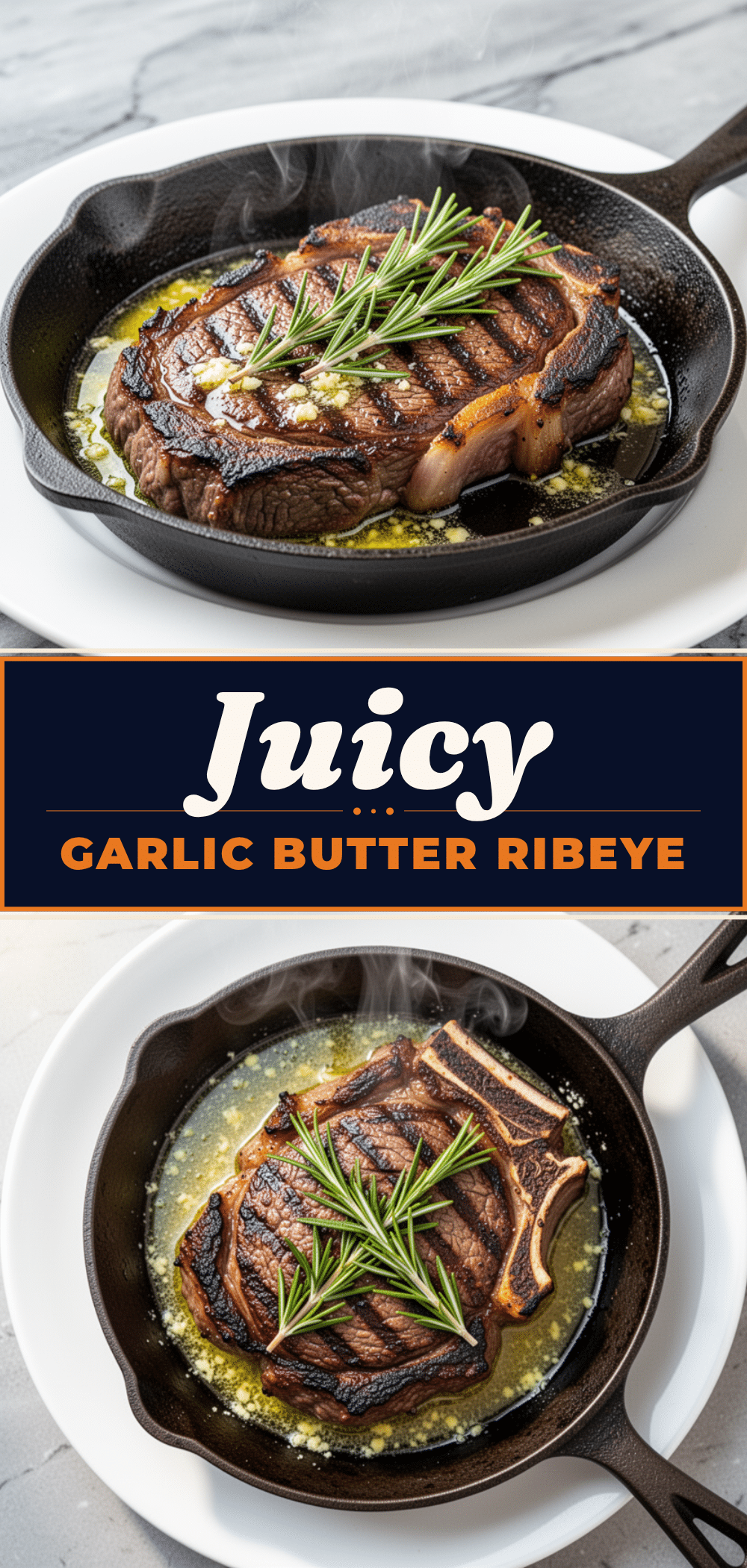
Cast Iron Garlic Butter Ribeye: Perfect 15-Min Weeknight Meal
- Total Time: 25 minutes
- Yield: 2 servings 1x
Description
A simple, restaurant-quality ribeye steak cooked in a cast iron skillet with a rich garlic butter sauce. This weeknight-friendly meal is fast, flavorful, and requires only one pan for easy cleanup.
Ingredients
- 2 ribeye steaks (1 to 1.5 inches thick)
- 1 teaspoon kosher salt
- ½ teaspoon freshly cracked black pepper
- 1 tablespoon neutral oil (avocado or grapeseed)
- 4 tablespoons unsalted butter
- 6–8 garlic cloves, smashed
- 2–3 sprigs fresh thyme or rosemary
- Pinch of red pepper flakes (optional)
Instructions
- Remove steaks from the fridge 30-45 minutes before cooking to bring to room temperature. Pat dry with paper towels and season generously with salt and pepper.
- Heat a cast iron skillet over medium-high heat for 3-5 minutes until very hot.
- Add neutral oil to the pan. Sear steaks for 3-4 minutes per side for medium-rare (internal temp 130°F/54°C).
- Reduce heat to medium-low. Add butter, smashed garlic, and herbs to the pan.
- Tilt pan and baste the steak continuously with the hot garlic butter for 1-2 minutes.
- Transfer steaks to a plate and pour remaining garlic butter over them. Rest for 5-10 minutes.
- Slice against the grain and serve immediately with extra sauce.
Notes
Let the steak come to room temperature before cooking for even searing. Do not skip the resting period to ensure juicy meat. Smash garlic cloves rather than mincing to prevent burning. Slice against the grain for maximum tenderness.
- Prep Time: 10 minutes
- Cook Time: 15 minutes
- Category: Main Course
- Cuisine: American
Nutrition
- Serving Size: 1 steak with sauce
- Calories: 650
- Fat: 50
- Saturated Fat: 20
- Carbohydrates: 2
- Protein: 45
Keywords: ribeye steak, cast iron skillet, garlic butter, weeknight dinner, easy steak recipe, gluten-free, high protein