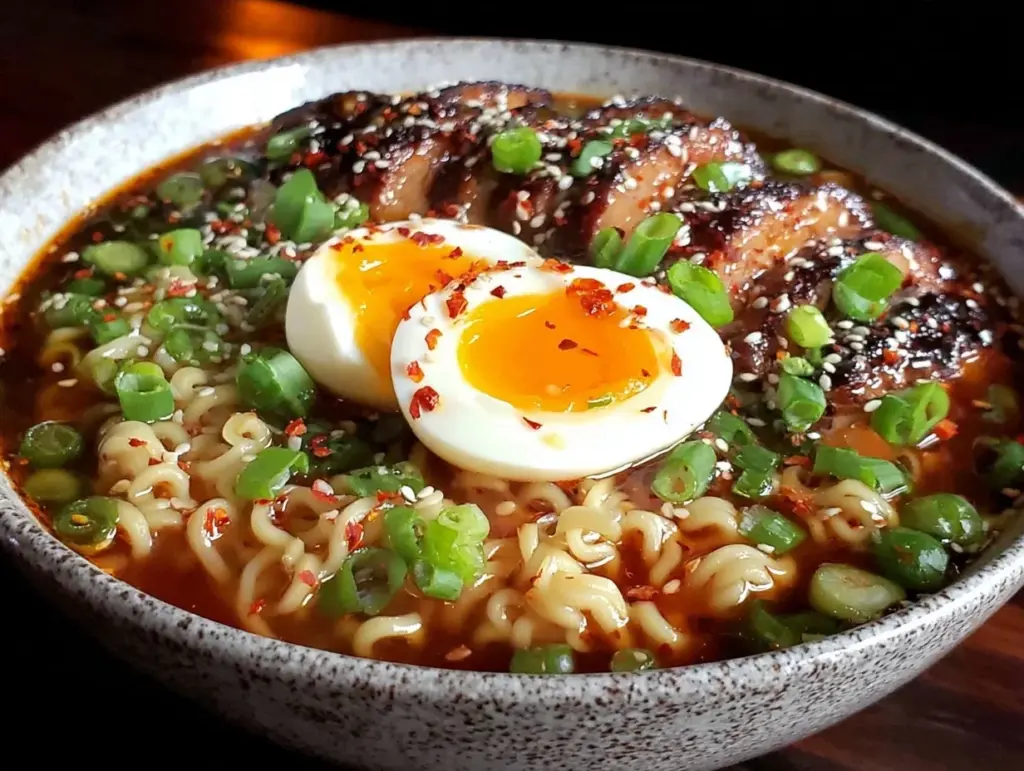
It’s 7:30 PM on a Tuesday, and the day has been one of those long, gray stretches where you don’t even remember what happened, just that you survived it. I walked into my kitchen feeling completely hollowed out, not even hungry, just needing something to fill the quiet. I didn’t want a complicated roast. I didn’t want to chop a dozen vegetables or worry about plating for company. I wanted warmth. I wanted something that would hug me from the inside out.
So I made this. These spicy ramen noodle bowls with jammy eggs are my absolute go-to when I need to take care of myself. It’s not just dinner; it’s a reset button. The process is gentle, the smells are inviting, and the result is deeply satisfying without being heavy or difficult. There’s something profoundly grounding about simmering broth and watching an egg soften in its shell. It slows you down. It reminds you to breathe.
I’ve made this bowl on more bad days than I care to admit. It’s the one to make when you need to take care of yourself after a stressful week, or when the rain is pounding against the window and you just want to stay under the blankets. It’s simple, yes, but it’s also deeply nourishing. The spicy broth wakes up your senses, the soft noodles comfort your stomach, and that jammy egg? It’s the perfect, creamy finish that makes you feel like you actually did something good for yourself today.
This isn’t about efficiency hacks or getting dinner on the table in ten minutes flat. This is about taking the time to make something warm and special for you. If you’re looking for a recipe that feels like a warm hug, this is it. It’s easier than you think, and it tastes better than anything you’ll order takeout.
Why You’ll Love This Recipe
There are days when cooking feels like just another chore on a to-do list. But this bowl flips the script. It’s not a task; it’s a pause. Here’s why this spicy ramen noodle bowl has become my sanctuary:
- It’s a Warm Embrace — Seriously, the first sip of that spicy broth feels like a physical weight lifting off your shoulders. I’ve had long days where I didn’t want to talk to anyone, and this bowl was the only thing I needed. It’s comforting in the deepest sense.
- It’s Gentle on the Hands — You don’t need to be a skilled chef to make this. If you can boil water and crack an egg, you can make this. I make it when I’m too tired to think, and it never fails to turn out perfect.
- It’s Nourishing, Not Heavy — After a day of stress, I don’t want a heavy, greasy meal that makes me feel sluggish. This broth is light enough to digest but rich enough to satisfy. It leaves me feeling full and cared for, not stuffed.
- It’s Flexible Comfort — Maybe you like it mild, maybe you like it fiery. Maybe you want extra veggies or extra protein. This bowl adapts to what *you* need in that moment. It’s your personal comfort zone in a bowl.
- It’s Quick, But Not Rushed — The active time is short, but the simmering allows you to just sit and exist. It’s not about speed; it’s about the ease of knowing you can have something delicious without the stress.
This is my answer to “what do I need right now?” when I’m feeling depleted. It’s reliable, it’s kind, and it always tastes better than takeout. I make this whenever I need to reconnect with myself.
Ingredients You’ll Need
One of the best things about this bowl is how simple the ingredients are. You probably have most of this in your kitchen already. This isn’t about sourcing exotic items; it’s about using what you have to create something special.
For the Broth
Chicken or Vegetable Broth (4 cups / 960ml) — I use a good quality low-sodium broth. It’s the base of everything, so don’t skimp on the quality. If you’re vegetarian, a rich vegetable stock works beautifully. I like to use bone broth when I can find it, for that extra depth.
Soy Sauce (2 tablespoons) — For saltiness and umami. I use regular soy sauce, but tamari works if you’re gluten-free. It adds that savory backbone.
Sesame Oil (1 tablespoon) — This is non-negotiable. It adds that nutty, aromatic smell that makes your kitchen feel cozy. Toasted sesame oil is best.
Ginger (1 tablespoon, fresh grated) — Fresh ginger adds a gentle warmth that soothes the stomach. Grate it yourself; it makes a huge difference compared to jarred. It’s bright and zesty.
Garlic (2 cloves, minced) — Just two cloves. Enough for flavor, not so much that it overpowers. Fresh is best.
Gochujang (1-2 tablespoons) — This Korean chili paste is what gives the broth its signature spicy kick. It’s fermented, so it has a deep, complex heat. Start with one tablespoon if you’re sensitive to spice. You can always add more.
Maple Syrup (1 teaspoon) — Just a touch to balance the heat and salt. It rounds out the flavors. Honey works too, but maple feels more autumnal to me.
For the Noodles and Toppings
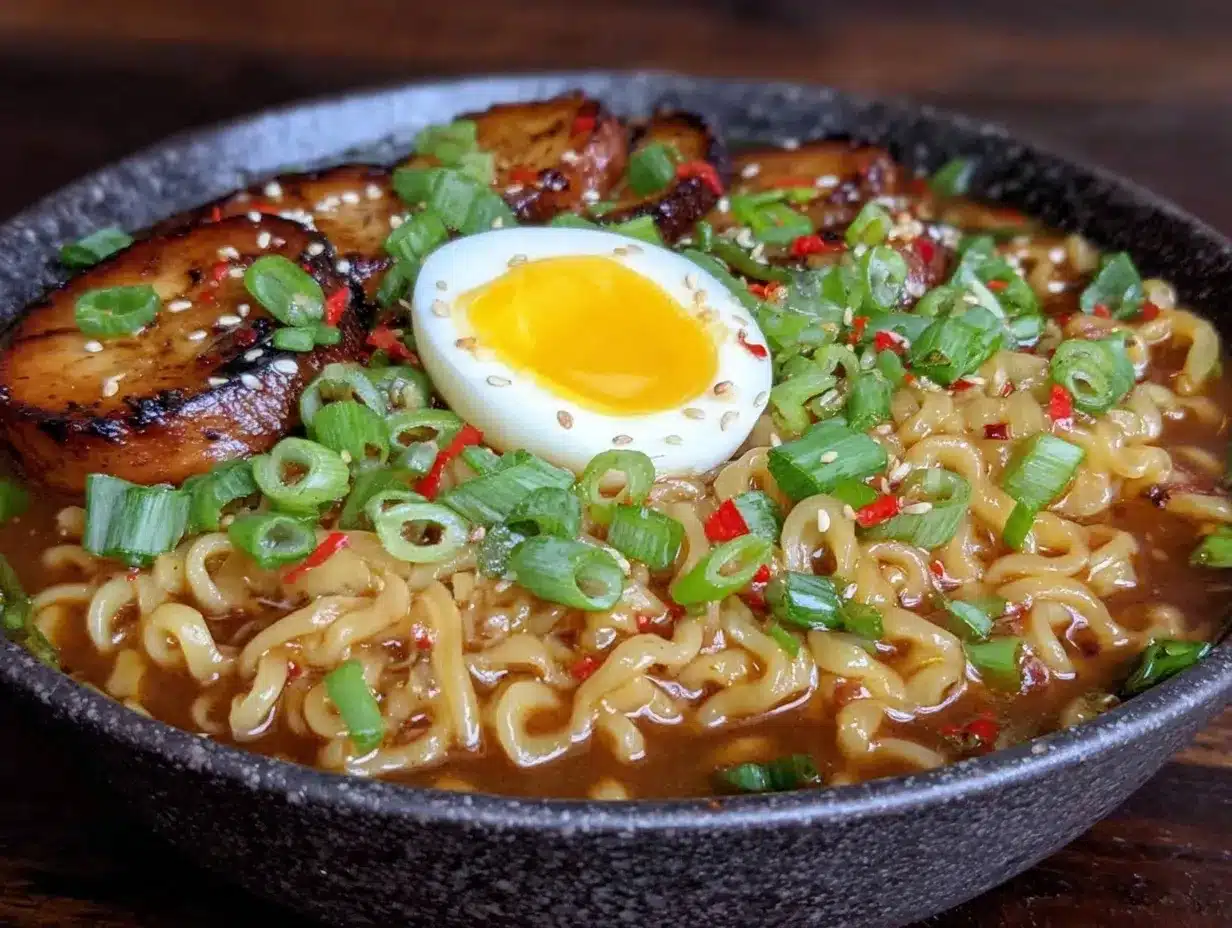
Ramen Noodles (2 packages) — I use instant ramen packets, but I toss out the seasoning packet. The noodles themselves are fine. You can also use fresh ramen noodles or even udon if you prefer a chewier texture. I like the thin wheat noodles for their quick cooking time.
Eggs (2 large) — For the jammy eggs. They need to be large so they fit in the pot comfortably. I buy organic when I can, because these are the star of the show.
Green Onions (2 stalks, thinly sliced) — For garnish. They add a fresh crunch and a pop of color. I use the white and green parts.
Red Pepper Flakes (optional) — For extra heat if you like it spicy. I sprinkle these on top right before eating.
Sesame Seeds (1 teaspoon) — For garnish and a little nutty crunch. Toasted sesame seeds are best.
Optional Add-ins — I sometimes add a handful of baby spinach or some sliced mushrooms. If I’m feeling fancy, I’ll add some leftover roasted chicken or tofu. But honestly, the noodles and egg are enough.
Shopping Tips
I keep gochujang in my fridge because it lasts for months. If you don’t have it, you can use chili garlic sauce, but gochujang has a unique fermented flavor that’s worth seeking out. I buy mine at the Asian market, but most grocery stores carry it in the international aisle now. If you’re feeling lazy, you can skip the fresh ginger and use a little powdered ginger, but fresh really is better.
Equipment Needed
You don’t need fancy equipment for this. Here’s what I actually use:
Medium Saucepan — I use a 3-quart saucepan for the broth. It’s the perfect size for four cups of liquid. Any heavy-bottomed pot works well to keep the heat even.
Small Pot — For boiling the eggs. I use a small saucepan, just big enough to hold two eggs in a single layer. A regular pot works too, but you need enough water to cover them.
Colander — For draining the noodles. Or you can just use a slotted spoon to lift them out.
Measuring Spoons — Pretty standard stuff. I keep a basic set on my counter.
Grapefruit Spoon or Small Knife — To peel the jammy eggs. The shell comes off easily if you shock them in ice water, but a spoon is great for getting under the shell.
Grater — For the ginger. A microplane works best, but a regular box grater is fine.
Wooden Spoon — For stirring the broth. Silicone works too. I just like the feel of wood in my hands.
That’s it. No special tools required. Just basic kitchen stuff you probably already have.
How to Make It: Step-by-Step
Alright, let’s make this! I’m walking you through exactly how I do it, including the little tricks I’ve picked up to make it the perfect comfort meal.
Step 1: Boil the Jammy Eggs (15 minutes)
Start with the eggs. This is the only part that takes a bit of planning, so get them going first. Bring a small pot of water to a boil. Gently lower the eggs into the boiling water using a spoon. Set a timer for exactly 6.5 minutes. This is the magic number for jammy eggs—firm white, runny yolk. After 6.5 minutes, immediately transfer the eggs to a bowl of ice water. This stops the cooking and makes them easier to peel. Let them cool for at least 5 minutes. I know it’s tempting to rush this, but patience pays off. The texture is everything.
Step 2: Simmer the Broth (5 minutes)
While the eggs cool, make the broth. In your medium saucepan, combine the chicken or vegetable broth, soy sauce, sesame oil, grated ginger, minced garlic, gochujang, and maple syrup. Bring it to a gentle simmer over medium heat. Stir well to dissolve the gochujang. Let it simmer for about 3-5 minutes. You want the flavors to meld together. The kitchen will start to smell amazing—spicy, savory, and warm. Taste it! Adjust the gochujang if you want more heat, or more soy sauce if you want more salt. This is your broth, so make it how you like it.
Step 3: Cook the Noodles and Assemble (5 minutes)
In a separate pot, bring water to a boil for the noodles. Cook the ramen noodles according to the package directions—usually about 2-3 minutes for instant noodles. Don’t overcook them! You want them tender but still with a bit of bite. Drain the noodles and divide them into two bowls. Ladle the hot spicy broth over the noodles. Peel the jammy eggs (they should slide right out of the shell) and place one on top of each bowl. Garnish with sliced green onions and a sprinkle of sesame seeds. If you like extra heat, add a pinch of red pepper flakes. Serve immediately and enjoy the warmth.
Total Time: About 25 minutes (mostly hands-off simmering)
Troubleshooting: If the broth is too spicy, add a splash of water or more broth. If it’s too thin, let it simmer longer to reduce. If the eggs are too hard, reduce the boiling time next time to 6 minutes. If they’re too soft, go to 7 minutes.
Expert Tips & Tricks
Here’s everything I’ve learned from making this bowl dozens of times. These tips will help you get the perfect result.
- Ice Water is Key — Don’t skip the ice bath for the eggs. It stops the cooking instantly and creates that perfect jammy texture. If you don’t have ice, cold running water works in a pinch.
- Toast Your Sesame Oil — Make sure you’re using toasted sesame oil, not regular sesame oil. The toasted version has a deep, nutty flavor that defines this dish. It’s worth the extra few dollars.
- Don’t Overcook the Noodles — Ramen noodles cook very quickly. They will continue to cook a bit in the hot broth, so take them out just before they’re fully done. Al dente is best.
- Adjust the Heat — Gochujang can vary in heat depending on the brand. Start with one tablespoon, taste, and add more if needed. It’s better to build up slowly than to make it too spicy to eat.
- Use Fresh Ginger — Fresh grated ginger adds a bright, zesty flavor that powdered ginger can’t match. It’s worth the extra minute to grate it.
- Peel with a Spoon — Once the eggs are cooled, tap the shell gently all over, then submerge it in water and peel. Using a spoon to slide under the shell makes it incredibly easy.
Variations & Substitutions
Once you’ve nailed the basic version, here’s how you can mix it up. I’ve tried all of these, and they’re all delicious.
Veggie-Loaded Version
Toss in a handful of baby spinach or chopped bok choy into the broth during the last minute of simmering. It wilts right in and adds a nice freshness. I do this when I want to feel like I’m eating healthier.
Mushroom Lover’s
Sauté some sliced shiitake or button mushrooms in a little sesame oil before adding the broth. They add an earthy depth that complements the spicy broth perfectly. It feels a bit more gourmet.
Protein-Packed
Add leftover roasted chicken, shredded pork, or crispy tofu to the bowl. I love using rotisserie chicken for this—it saves time and adds great flavor. For a vegan option, marinated tofu works well.
Mild Version
If you’re serving this to kids or someone who doesn’t like spice, reduce the gochujang to 1 teaspoon and add a little extra broth. You can also use a mild chili sauce instead.
Noodle Swaps
While I love instant ramen, you can use fresh ramen noodles, udon, or even spaghetti if that’s all you have. Udon will give you a chewier, heartier bowl. Spaghetti works in a pinch, though the texture is different.
Dietary Modifications
- Gluten-Free — Use tamari instead of soy sauce and ensure your ramen noodles are gluten-free. Most instant ramen is wheat-based, so check the label.
- Dairy-Free — This recipe is naturally dairy-free. Just make sure your broth doesn’t contain any hidden dairy.
- Vegetarian/Vegan — Use vegetable broth and gochujang (check the label, some contain fish sauce, though most are vegan). Add tofu or mushrooms for protein.
Serving & Storage
How to Serve: I usually serve this straight from the stove. It’s meant to be eaten hot and fresh. I like to sit down with it, maybe put on a podcast or a quiet show, and just enjoy the moment. It’s a ritual for me.
Side Dishes: I don’t usually need sides, but if I’m feeling fancy, I’ll add a simple side of steamed broccoli or a small salad with a sesame dressing. Sometimes I just have it with a cup of green tea.
Storage: The broth can be stored in an airtight container in the fridge for up to 3 days. The noodles and eggs are best fresh. If you’re meal prepping, store the broth and noodles separately, and combine them when you’re ready to eat. The eggs should be eaten within 2 days of boiling.
Reheating: Reheat the broth gently on the stove. Add the noodles and heat through for just a minute. Don’t microwave the noodles alone—they get tough. If you’re reheating leftovers, add a splash of water to the broth if it’s thickened.
Freezing: I don’t recommend freezing this dish. The eggs will become rubbery, and the noodles will get mushy. It’s best made fresh.
Nutrition Information
I’m not a nutritionist, but here’s the breakdown if you’re tracking. This is comfort food, so it’s not a diet recipe, but it’s balanced enough for a regular meal.
Per Serving (based on 2 bowls):
| Nutrient | Amount |
|---|---|
| Calories | 450 |
| Protein | 18g |
| Carbs | 55g |
| Fat | 16g |
| Fiber | 3g |
| Sodium | 900mg |
What’s Good: It has a good balance of carbs and protein. The broth is flavorful without being overly heavy. You can add more vegetables to boost the nutrition.
What to Know: The sodium content can be high depending on the broth and soy sauce you use. Using low-sodium broth and tamari can help. The fat comes from the egg yolk and sesame oil, which are healthy fats.
My Take: This is about comfort, not calories. Enjoy it as a treat for yourself. If you’re watching sodium, just be mindful of your broth choice. It’s better than takeout and you control what goes in.
Final Thoughts
So that’s my spicy ramen noodle bowl with jammy eggs. It’s simple, it’s warm, and it’s exactly what I need when I’m feeling drained. I’ve made this more times than I can count, and it never gets old. It’s my little act of self-care on a weeknight.
This bowl has saved me on so many hard days. It’s my answer to “what do I need?” when I’m tired, stressed, or just lonely in my kitchen. It’s nourishing, it’s easy, and it tastes like love. I hope it brings you that same comfort.
Make it yours! Add your favorite veggies, adjust the spice, or top it with some crispy garlic if you’re feeling fancy. The best recipes are the ones you adapt to your needs. If you make this, I’d love to hear how it goes. Drop a comment and let me know what you think!
Happy cooking. And I hope your kitchen smells as good as mine does right now.
Frequently Asked Questions
Can I use instant ramen seasoning packets?
You can, but I strongly recommend skipping them. They’re high in sodium and artificial flavors. The homemade broth with gochujang and soy sauce is so much better and healthier. If you’re in a pinch, you can use half a packet, but the fresh broth is worth the extra minute.
Why are my eggs too hard or too soft?
It’s all about the timing. For jammy eggs, 6.5 minutes in boiling water is the sweet spot. If you like them softer, try 6 minutes. If you like them firmer, try 7 minutes. Make sure you shock them in ice water immediately after boiling to stop the cooking. This is the key to getting that perfect runny yolk.
Can I make this ahead of time?
You can make the broth ahead of time and store it in the fridge for up to 3 days. Reheat it gently when you’re ready to eat. The noodles and eggs are best fresh, so cook them right before serving. If you’re meal prepping, store the components separately and combine them when you’re ready.
Is gochujang very spicy?
It’s moderately spicy, but it’s more about the fermented depth than pure heat. It has a sweet, savory, and spicy profile. If you’re sensitive to spice, start with 1 tablespoon and adjust. You can also use chili garlic sauce as a substitute, though the flavor will be different.
Can I use vegetable broth instead of chicken broth?
Yes, absolutely. Vegetable broth works beautifully in this recipe. It makes the dish vegetarian. Just make sure to use a rich vegetable stock for the best flavor. I often use vegetable broth when I want a lighter meal.
What can I use instead of gochujang?
If you can’t find gochujang, you can use chili garlic sauce, sriracha, or even red pepper flakes with a little soy sauce and sesame oil. It won’t be exactly the same, but it will still be spicy and delicious. Gochujang adds a unique fermented flavor, but the dish will still work with substitutes.
How do I store leftover broth?
Let the broth cool completely, then store it in an airtight container in the fridge for up to 3 days. You can also freeze it for up to 3 months. Thaw it in the fridge overnight and reheat gently on the stove. The flavors might intensify, so taste and adjust before serving.
Pin This Recipe!
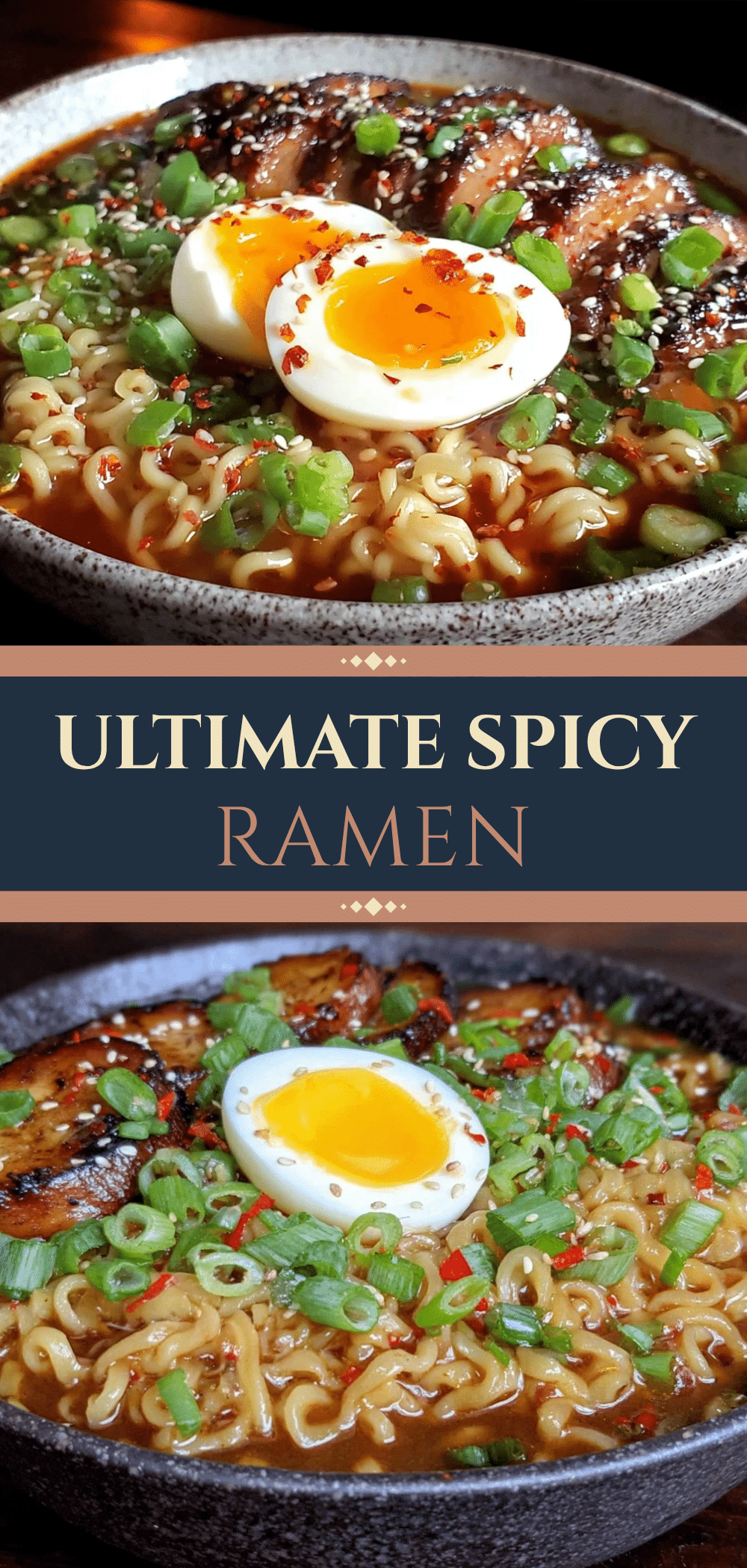
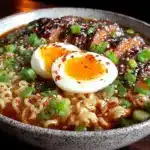
Spicy Ramen Noodle Bowls with Jammy Eggs
- Total Time: 25 minutes
- Yield: 2 servings 1x
Description
A comforting, self-care focused spicy ramen noodle bowl featuring a rich gochujang broth, tender noodles, and perfectly jammy soft-boiled eggs. Simple to make and deeply nourishing.
Ingredients
- 4 cups chicken or vegetable broth (low-sodium recommended)
- 2 tablespoons soy sauce (or tamari for gluten-free)
- 1 tablespoon toasted sesame oil
- 1 tablespoon fresh ginger, grated
- 2 cloves garlic, minced
- 1–2 tablespoons gochujang (Korean chili paste)
- 1 teaspoon maple syrup
- 2 packages ramen noodles (seasoning packet discarded)
- 2 large eggs
- 2 stalks green onions, thinly sliced
- 1 teaspoon toasted sesame seeds
- Red pepper flakes (optional, for garnish)
- Ice water (for cooling eggs)
Instructions
- Bring a small pot of water to a boil. Gently lower eggs into the water and boil for exactly 6.5 minutes for jammy eggs.
- Immediately transfer eggs to a bowl of ice water and let cool for at least 5 minutes to stop cooking and ease peeling.
- In a medium saucepan, combine broth, soy sauce, sesame oil, grated ginger, minced garlic, gochujang, and maple syrup.
- Bring the broth mixture to a gentle simmer over medium heat, stirring to dissolve the gochujang. Simmer for 3-5 minutes to meld flavors.
- In a separate pot, bring water to a boil and cook ramen noodles according to package directions (usually 2-3 minutes). Drain noodles.
- Divide cooked noodles into two bowls.
- Peel the cooled jammy eggs and place one on top of each bowl of noodles.
- Ladle the hot spicy broth over the noodles.
- Garnish with sliced green onions, sesame seeds, and red pepper flakes if desired. Serve immediately.
Notes
For the best jammy eggs, do not skip the ice bath; it stops the cooking process instantly. Use toasted sesame oil for authentic flavor. If the broth is too spicy, add a splash of water. If too thin, simmer longer to reduce. Fresh ginger is preferred over powdered for better flavor.
- Prep Time: 10 minutes
- Cook Time: 15 minutes
- Category: Main Course
- Cuisine: Asian Fusion
Nutrition
- Serving Size: 1 bowl per serving
- Calories: 450
- Sugar: 4
- Sodium: 900
- Fat: 16
- Saturated Fat: 3
- Carbohydrates: 55
- Fiber: 3
- Protein: 18
Keywords: ramen, spicy noodles, jammy eggs, comfort food, self-care, gochujang, quick dinner, vegetarian option