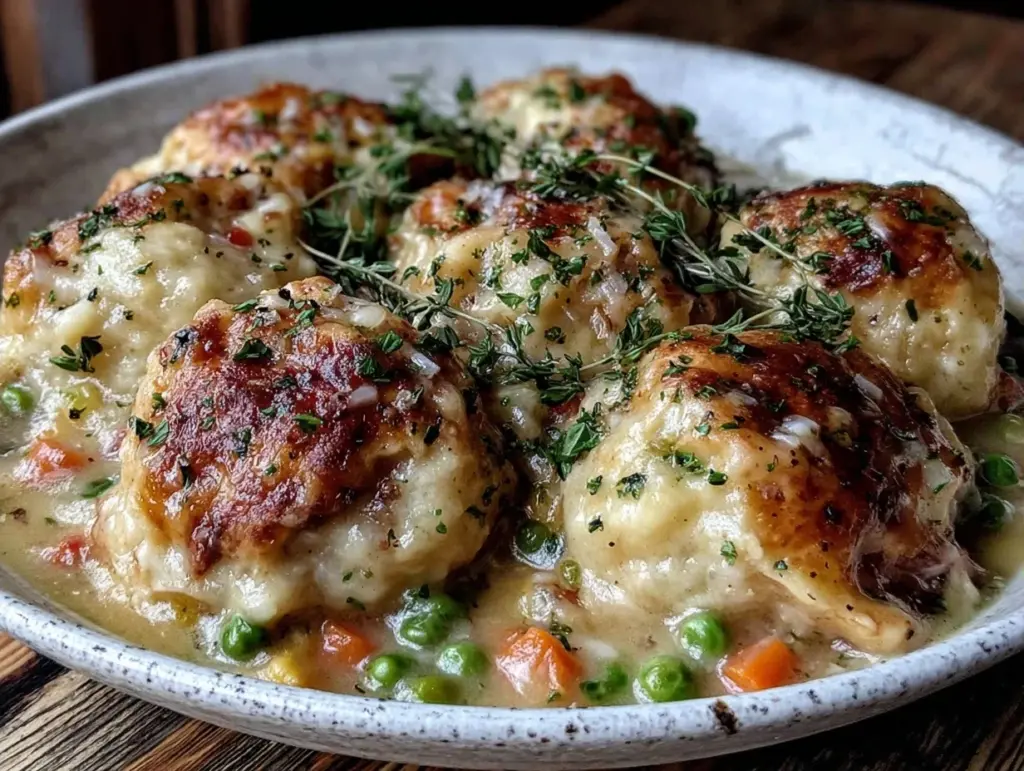
There is a specific kind of silence that falls over my house when it starts to rain in October. The leaves are turning that deep, burnt orange, the air smells like woodsmoke and damp earth, and suddenly, the only thing that feels right is something warm, heavy, and comforting. Last November, I was feeling particularly under the weather—a lingering cold that had me shivering in a sweater while everyone else was fine. I wanted soup. Not a light, broth-based chicken noodle soup, but a thick, hearty, spoon-stand-up-in-it chicken and dumplings stew. I pulled out an old recipe from my mother, confident I could knock it out in an hour.
I was wrong. The dumplings turned out dense, gummy little hockey pucks that sank to the bottom of the pot. I ate them anyway, wrapped in a blanket, feeling like a failure. But that night, I couldn’t stop thinking about the texture. Why were they so heavy? I spent the next week experimenting, testing different flours, different liquids, and different mixing methods. I tried baking powder, baking soda, even yeast (don’t ask). Finally, on a Tuesday night, I realized the problem wasn’t the chicken or the broth. It was the flour. I had been overworking the dough, developing gluten when I shouldn’t have been. I switched to a lower-protein pastry flour and, crucially, I stopped kneading. I just folded it. And when I lifted the lid after ten minutes? Steam billowed out, revealing dumplings that were light, airy, and perfectly fluffy. That was the moment I stopped making “chicken and dumplings” and started making my chicken and dumplings.
This recipe is that final version. It’s the one I make when the leaves are falling and my family asks, “What’s for dinner?” without looking up from their phones. It’s rich with roasted chicken, thickened with a roux that tastes like comfort, and topped with dumplings that are actually like little clouds. If you’ve struggled with gummy dumplings before, this is the recipe that will change your mind. It’s not just a meal; it’s a hug in a bowl.
Why You’ll Love This Recipe
There are a lot of chicken and dumpling recipes out there. Some are more like chicken soup with noodles. Some are more like chicken pot pie filling. This one sits in that perfect, cozy middle ground. Here’s why this version has earned a permanent spot in my weekly rotation:
- Actually Fluffy Dumplings — This is the big one. Most recipes give you dense bread. Ours are tender, pillowy, and herb-flecked. The trick is in the mixing method (more on that below), but the result is worth every minute of effort.
- Rich, Golden Broth — We’re not skimping on flavor. We roast the chicken bones for depth, then build a roux that gives the stew a velvety texture. It’s savory, slightly creamy, and deeply satisfying.
- Uses Leftover Chicken — This is the ultimate weeknight savior. If you have rotisserie chicken from the store or leftover roast chicken from Sunday, this comes together in 45 minutes. I’ve made this on busy weeknights when I’m exhausted, and my kids still ask for seconds.
- One-Pot Wonder — Well, technically you need a roasting pan and a Dutch oven, but it’s all in one vessel for the stew part. Less cleanup means more time on the couch.
- Freezes Like a Dream — I know, I know. People say dumplings don’t freeze well. And they’re right—the dumplings get soggy if you freeze them in the broth. But the stew base freezes beautifully. Make a double batch, freeze the chicken and broth, and boil up fresh dumplings when you need it. It’s basically meal prep magic.
This is my go-to when I need dinner to just work. No complicated techniques, no weird ingredients, just reliable, delicious food that makes everyone happy. It’s the kind of meal that makes you want to slow down and actually taste what you’re eating.
Ingredients You’ll Need
Here’s the best part: you probably have most of this already. I’m particular about a few things here, and I’ll tell you exactly why. This isn’t just a list; it’s a guide to getting it right the first time.
For the Stew Base
Chicken (1 whole chicken, approx 4-5 lbs / 1.8-2.2kg) — I use a whole chicken because the bones add so much flavor to the broth. If you’re in a rush, 3 cups of shredded rotisserie chicken works, but you’ll miss that deep, roasted depth. If using a whole chicken, we’ll roast it first, then shred it. Trust me, the effort is worth it.
Unsalted Butter (4 tablespoons / 60g) — For the roux. I use unsalted so I can control the saltiness. European-style butter with higher fat content is nice, but regular salted butter works if you reduce the added salt later.
All-Purpose Flour (4 tablespoons / 30g) — For the roux. This thickens the stew and gives it that creamy, coat-your-spoon consistency.
Yellow Onion (1 large, diced / about 200g) — Sweet onions work too, but yellow gives better depth. White onions are too sharp for this. Dice it small so it melts into the sauce.
Carrots (3 medium, peeled and chopped / about 300g) — Classic mirepoix. Don’t over-chop them; you want them to hold their shape. Chunks the size of a dice are perfect.
Celery (3 stalks, chopped / about 150g) — Adds that essential earthy, salty note. If you don’t like celery, use more carrots or add a leek. But don’t skip it entirely; it’s the backbone of the flavor.
Garlic (4 cloves, minced / about 2 tablespoons) — Fresh only. No jarred garlic in this recipe. It’s too metallic for a delicate stew.
Chicken Broth (6 cups / 1.4L) — Use low-sodium so you can control the salt. Homemade is best, but a good quality store-bought broth (like Better Than Bouillon or Swanson) works fine. Avoid the “chicken flavor” broth; it tastes artificial.
Heavy Cream (½ cup / 120ml) — Optional, but I highly recommend it. It adds richness and helps the broth feel luxurious. Half-and-half works if you want to lighten it up slightly.
Bay Leaves (2) — For simmering. Remove them before serving. They infuse a subtle herbal note that’s hard to replicate.
Fresh Thyme (4 sprigs) — Or 1 teaspoon dried thyme. Fresh is better, but dried works. Thyme and chicken are best friends.
Salt and Black Pepper — To taste. We’ll season as we go.
For the Fluffy Herb Biscuits
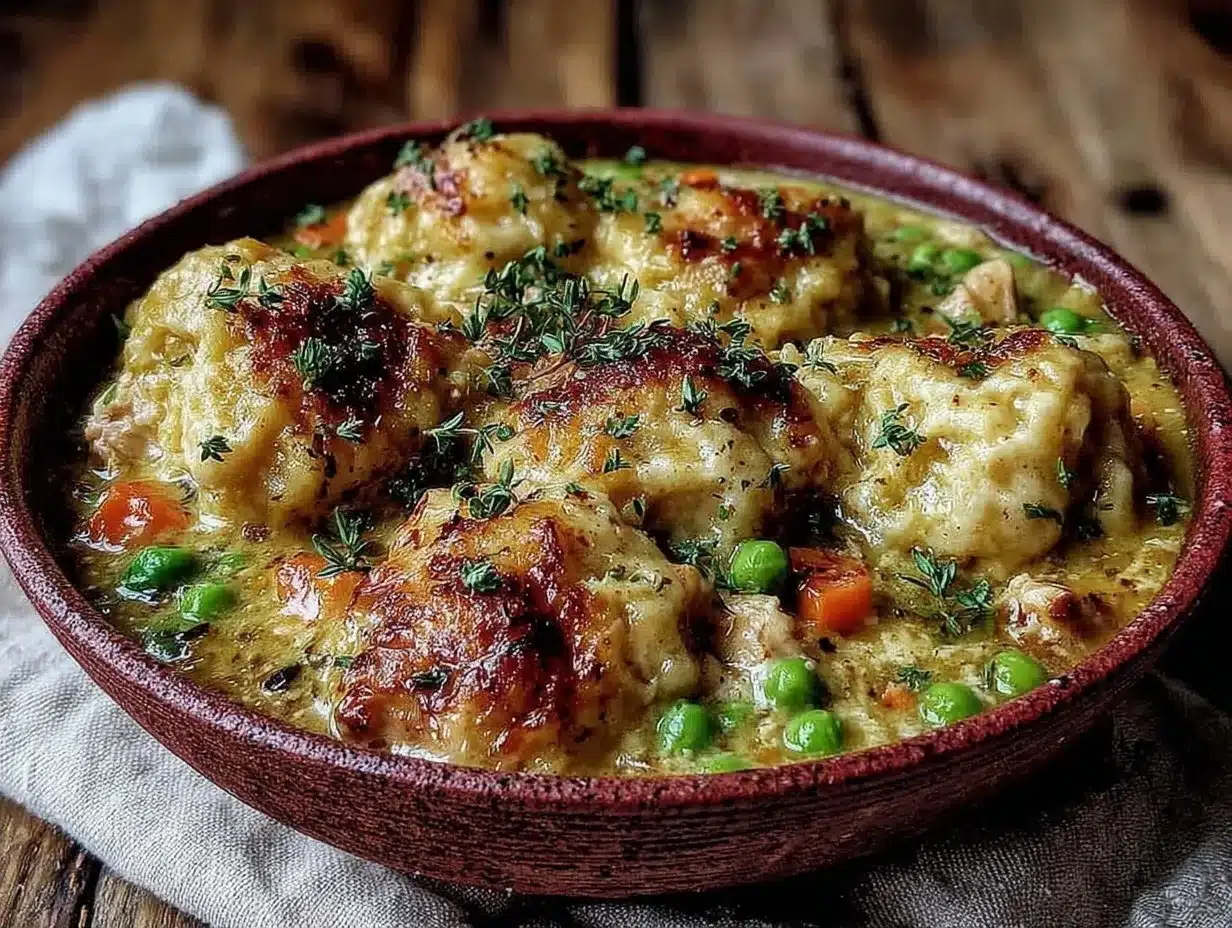
Pastry Flour (2 cups / 250g) — This is the one trick. Pastry flour has less protein than all-purpose flour, which means less gluten development. Less gluten = tender, crumbly, fluffy biscuits. If you can’t find it, use all-purpose but handle the dough gently. But really, get the pastry flour.
Baking Powder (1 tablespoon / 15g) — Fresh is crucial. If your baking powder is old, your biscuits will be flat. Check the date! If it doesn’t fizz in hot water, toss it.
Baking Soda (½ teaspoon / 2.5g) — Just a little bit to help with browning and lift.
Salt (1 teaspoon / 6g) — Enhances the flavor.
Cold Unsalted Butter (½ cup / 115g, cubed) — Cold butter is non-negotiable. When the cold butter hits the hot stew, it melts slowly, creating steam pockets that lift the biscuit. If the butter is warm, it absorbs into the flour and you get dense dumplings.
Buttermilk (¾ cup / 180ml) — The acidity reacts with the baking soda for lift. If you don’t have buttermilk, add 1 tablespoon of lemon juice or vinegar to regular milk and let it sit for 5 minutes. It’s not quite the same, but it works.
Fresh Parsley (2 tablespoons, chopped) — Adds color and a fresh, grassy note. Dried parsley doesn’t cut it here.
Optional Add-ins:
Diced Ham (1 cup) — For a smoky twist.
Diced Mushrooms (1 cup) — For earthiness.
Frozen Peas (½ cup) — Stirred in at the end for color.
Equipment Needed
You don’t need fancy equipment for this. Here’s what I actually use.
Dutch Oven (6-quart) — I use a Le Creuset, but any heavy-bottomed pot works. It needs to hold 6 cups of broth plus the chicken and dumplings comfortably. If you don’t have one, a large stockpot works.
Roasting Pan — For roasting the chicken. Any pan that fits your chicken works. I use a rimmed baking sheet if I’m in a hurry.
Measuring Cups and Spoons — Standard stuff. Dollar store versions work fine.
Wooden Spoon — For stirring the roux and stew. Silicone works too.
Pastry Blender or Fork — For cutting the butter into the flour. I use a fork because it’s easier to clean, but a pastry blender is faster.
Colander — For draining the chicken if you’re boiling it. For roasting, you just shred it directly in the pan.
Sharp Knife — For chopping veggies. Dull knives make you cry more—learned this the hard way.
Cutting Board — Any size works. I use plastic for easier cleanup.
Optional but nice:
Instant-Read Thermometer — To check if the chicken is cooked through.
Rolling Pin — For rolling out the biscuit dough. I like a French rolling pin because it has no handle, giving you better control.
How to Make It: Step-by-Step
Alright, let’s make this! I’m walking you through exactly how I do it, including the little tricks I’ve picked up.
Step 1: Roast the Chicken (45-60 minutes)
Preheat your oven to 400°F (200°C). Place the whole chicken on a roasting rack in a roasting pan. Rub it with olive oil, salt, pepper, and a few sprigs of thyme. Roast for 45-60 minutes, until the internal temperature reaches 165°F (74°C) in the thickest part of the thigh. Let it rest for 15 minutes. This resting time is crucial—it keeps the juices inside. While it rests, shred the meat, discarding the skin and bones. Save the carcass if you want to make stock later, but for this recipe, we’re using the meat.
Step 2: Make the Roux (5 minutes)
In your Dutch oven, melt the butter over medium heat. Once it’s foaming, add the diced onion and carrots. Cook for 5-7 minutes, stirring occasionally, until the onions are translucent and soft. Add the minced garlic and cook for 1 minute, until fragrant. Do not let the garlic brown—it burns easily. Sprinkle the flour over the vegetables and stir constantly for 2 minutes. This cooks out the raw flour taste. You’ll see the mixture turn a light golden color. This is your roux, and it’s the foundation of the stew’s thickness.
Step 3: Build the Stew (10 minutes)
Gradually whisk in the chicken broth, a little at a time, to prevent lumps. Once all the broth is in, stir in the heavy cream, bay leaves, and thyme sprigs. Bring to a gentle simmer. Add the shredded chicken. Taste the broth. It should be well-seasoned, maybe a little too salty, because the dumplings will absorb some of that flavor. Simmer for 10 minutes to let the flavors meld. The broth should be thickening slightly.
Step 4: Prepare the Biscuit Dough (10 minutes)
While the stew simmers, make the dumplings. In a large bowl, whisk together the pastry flour, baking powder, baking soda, and salt. Add the cold, cubed butter. Use a pastry blender or two forks to cut the butter into the flour until the mixture looks like coarse crumbs with some pea-sized pieces of butter remaining. These butter chunks are key—they create steam pockets for lift. Pour in the buttermilk and chopped parsley. Stir gently with a fork until the dough just comes together. Do not overmix. It should look shaggy and messy. That’s good.
Step 5: Form and Cook the Dumplings (15 minutes)
Turn the dough out onto a lightly floured surface. Gently pat it into a rectangle about ½-inch thick. Fold the dough over itself 2-3 times to create layers. This is the “laminating” step that adds fluffiness. Pat it back out to ½-inch thick. Cut into 1-inch squares. You’ll get about 16-20 dumplings. Bring the stew back to a gentle simmer. Drop the dumplings into the stew, spacing them out so they don’t stick together. Cover the pot tightly with a lid. Simmer for 12-15 minutes. Do not peek! The steam needs to stay in to cook the dumplings. After 12 minutes, check one. It should be cooked through and fluffy. If it’s still doughy, cover and cook for 2-3 more minutes.
Step 6: Serve
Remove the bay leaves and thyme sprigs. Ladle the stew and dumplings into bowls. Garnish with fresh parsley and cracked black pepper. Serve immediately. The dumplings will continue to absorb broth, so don’t let them sit in the pot for too long if you’re serving guests.
Total Time: About 1 hour 30 minutes (1 hour roasting, 30 minutes active cooking)
Expert Tips & Tricks
Here’s everything I’ve learned from making this dozens of times. These tips will save you from my mistakes.
The One Trick: Pastry Flour and Cold Butter
I can’t stress this enough. Regular all-purpose flour has more protein, which means more gluten. More gluten means chewy, tough biscuits. Pastry flour has less protein, so it’s tender. And the butter must be cold. If the butter melts into the flour before it hits the pot, you lose the steam pockets. Keep your butter in the fridge until the second you cut it in.
Don’t Peek
When you drop the dumplings in the pot, cover it tightly and don’t open it for at least 10 minutes. If you peek, you let the steam escape, and the dumplings won’t rise properly. It’s tempting, but trust the process.
Handle the Dough Gently
When you mix the biscuit dough, stop as soon as it comes together. Overmixing develops gluten, which makes them dense. It should look messy and shaggy. That’s perfect.
Simmer, Don’t Boil
When cooking the dumplings, keep the stew at a gentle simmer. A rolling boil will break the dumplings apart and make them mushy. You want them to cook gently in the steam.
Salt Your Stew Well
The dumplings are bland on their own. They get their flavor from the stew. Make sure the broth is well-seasoned before adding the dumplings. It should taste slightly too salty on its own.
Variations & Substitutions
Once you’ve nailed the basic version, here’s how you can mix it up. I’ve tried all of these.
Veggie-Loaded
Add 1 cup of diced mushrooms or ½ cup of frozen peas in the last 5 minutes of cooking. The peas add a nice pop of color and sweetness. This is how I get my kids to eat more vegetables.
Gluten-Free
Use gluten-free pastry flour or a 1:1 gluten-free all-purpose flour blend. Make sure your baking powder is certified gluten-free. The dumplings might be slightly more delicate, so handle them gently.
Dairy-Free
Replace the butter with coconut oil or dairy-free butter. Use coconut milk instead of heavy cream. For the biscuits, use coconut milk instead of buttermilk. It’s not exactly the same, but it’s still tasty.
Spicy
Add ½ teaspoon of cayenne pepper or a diced jalapeño to the stew. The heat cuts through the richness of the cream and butter. Great for a winter night.
Herb Swap
Replace the thyme with rosemary or sage. Sage and chicken are a classic combination, especially in the fall. Just use 1 teaspoon of dried sage or 2 sprigs of fresh rosemary.
Serving & Storage
How to Serve:
I usually serve this straight from the Dutch oven at the dinner table—it looks rustic and stays warm. But here are other ways I’ve enjoyed it:
Side Dishes:
– Garlic bread (obviously)
– A simple green salad with a vinaigrette to cut the richness
– Roasted Brussels sprouts with bacon
– Crusty sourdough bread for dipping
Storage Instructions:
Refrigerator:
Store the stew (without dumplings) in an airtight container for up to 4 days. The dumplings do not store well in the fridge—they get soggy. So, I recommend storing the stew base separately and making fresh dumplings when you reheat.
Reheating:
Reheat the stew gently on the stove over low heat. If it’s too thick, add a splash of broth or water. Make fresh dumplings while it heats up. It takes 15 minutes and tastes way better than reheated leftovers.
Freezing:
Freeze the stew base (without dumplings) for up to 3 months. Thaw in the fridge overnight and reheat. Make fresh dumplings when serving. The dumplings themselves do not freeze well.
Pro tip: If the stew is too thick after reheating, add a little chicken broth or water. It will loosen up nicely.
Nutrition Information
I’m not a nutritionist, but here’s the breakdown if you’re tracking. This is per serving (based on 6 servings).
| Nutrient | Amount |
|---|---|
| Calories | 480 |
| Protein | 35g |
| Carbs | 45g |
| Fiber | 3g |
| Sugar | 4g |
| Fat | 18g |
| Saturated Fat | 9g |
| Sodium | 650mg |
What’s Good: High in protein from the chicken. Decent amount of fiber from the veggies.
What to Know: Higher in calories and sodium due to the cream and broth. Use low-sodium broth and less salt to reduce sodium. The dumplings are carb-heavy, so keep portion sizes in mind if you’re watching carbs.
My Take: Look, this is comfort food with cream and cheese. It’s not a diet recipe. But it’s way better than takeout, costs less, and I know exactly what’s in it. When I want to make it lighter, I use half-and-half and load up on vegetables. But usually? I just eat a reasonable portion and enjoy it.
Final Thoughts
So that’s my go-to cozy fall chicken and dumplings! I’ve probably talked your ear off at this point, but when you make a recipe this often, you have a lot to say about it. This has saved weeknight dinners more times than I can count. It’s my answer to “what’s for dinner” when I’m tired, don’t want takeout, and still want something that tastes really good. My kids are happy, my husband’s happy, and I’m happy because I’m not stressed about cooking.
Make it yours! Try different add-ins, swap in your favorite vegetables, adjust the herbs (though thyme is my favorite). The best recipes are the ones you adapt to your family’s tastes. If you make this, drop a comment and let me know what you think! I love hearing how recipes turn out in your kitchen. And if something doesn’t work, tell me that too—I’m here to help troubleshoot.
Happy cooking! And I hope your kitchen smells half as good as mine does right now.
Frequently Asked Questions
Can I use all-purpose flour for the dumplings?
You can, but the dumplings will be chewier and denser. Pastry flour has less protein, which means less gluten and more tenderness. If you must use all-purpose, handle the dough as gently as possible and don’t overmix. But really, try to find pastry flour—it makes a huge difference.
Why are my dumplings gummy?
Usually, this means you overmixed the dough or peeked at them while they were cooking. Overmixing develops gluten, which makes them tough. And peeking lets the steam escape, so they don’t cook properly. Remember: gentle mixing, no peeking, and cold butter.
Can I make this ahead for a dinner party?
Yes! Make the stew base up to 2 days ahead and store in the fridge. Cook fresh dumplings right before serving (takes 15 minutes). Reheat the stew gently and drop in the dumplings. It won’t be quite as good as fresh, but it’s close and saves you stress during the party.
Can I use rotisserie chicken?
Absolutely. Use 3-4 cups of shredded rotisserie chicken. Skip the roasting step and go straight to making the roux. Add the chicken in Step 3. It’s a great time-saver for weeknights.
How do I reheat leftovers without the dumplings getting soggy?
The dumplings will absorb the broth and get soft. If you don’t mind that, just reheat the whole thing gently on the stove. If you want them to stay fluffy, store the stew and dumplings separately. Reheat the stew, and make fresh dumplings. It’s the only way to get that fresh-baked texture.
Can I freeze the dumplings?
No. Dumplings do not freeze well. They become mushy and lose their texture when thawed. Freeze the stew base instead, and make fresh dumplings when you’re ready to eat.
What if I don’t have buttermilk?
You can make a substitute. Add 1 tablespoon of lemon juice or white vinegar to 1 cup of regular milk. Let it sit for 5-10 minutes until it curdles slightly. It’s not exactly the same, but it works in a pinch.
Pin This Recipe!
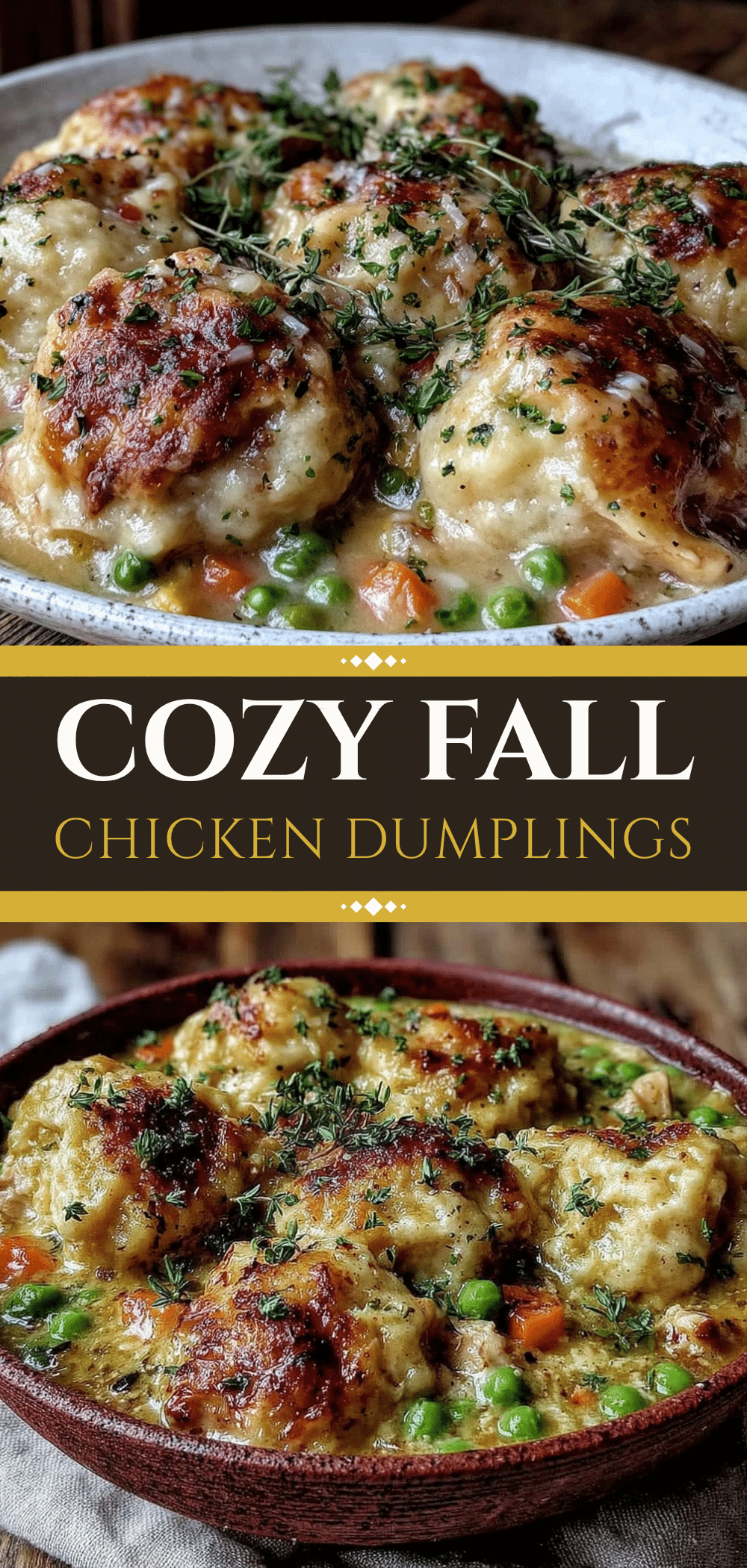

Cozy Fall Chicken and Dumplings: The One Trick for Fluffy Biscuits
- Total Time: 1 hour 30 minutes
- Yield: 6 servings 1x
Description
A hearty, one-pot chicken and dumplings stew featuring rich, golden broth and incredibly fluffy, herb-flecked biscuits made with pastry flour and cold butter for the perfect texture.
Ingredients
- 1 whole chicken (approx 4–5 lbs / 1.8-2.2kg)
- 4 tablespoons (60g) unsalted butter
- 4 tablespoons (30g) all-purpose flour
- 1 large yellow onion, diced
- 3 medium carrots, peeled and chopped
- 3 stalks celery, chopped
- 4 cloves garlic, minced
- 6 cups (1.4L) low-sodium chicken broth
- ½ cup (120ml) heavy cream
- 2 bay leaves
- 4 sprigs fresh thyme
- Salt and black pepper to taste
- 2 cups (250g) pastry flour
- 1 tablespoon (15g) baking powder
- ½ teaspoon (2.5g) baking soda
- 1 teaspoon (6g) salt
- ½ cup (115g) cold unsalted butter, cubed
- ¾ cup (180ml) buttermilk
- 2 tablespoons fresh parsley, chopped
Instructions
- Preheat oven to 400°F (200°C). Roast the whole chicken on a rack for 45-60 minutes until internal temperature reaches 165°F (74°C). Let rest for 15 minutes, then shred meat, discarding skin and bones.
- In a Dutch oven, melt 4 tablespoons butter over medium heat. Add diced onion and carrots, cooking for 5-7 minutes until soft. Add garlic and cook for 1 minute.
- Sprinkle all-purpose flour over vegetables and stir constantly for 2 minutes to create a roux.
- Gradually whisk in chicken broth, heavy cream, bay leaves, and thyme. Bring to a gentle simmer and add shredded chicken. Simmer for 10 minutes.
- In a large bowl, whisk pastry flour, baking powder, baking soda, and salt. Cut in cold cubed butter until mixture resembles coarse crumbs.
- Pour in buttermilk and chopped parsley. Stir gently until dough just comes together (do not overmix).
- Pat dough into a ½-inch thick rectangle, fold 2-3 times, and cut into 1-inch squares.
- Drop dumplings into the simmering stew, spacing them out. Cover tightly and simmer for 12-15 minutes without peeking.
- Remove bay leaves and thyme sprigs. Serve immediately, garnished with fresh parsley and cracked black pepper.
Notes
The key to fluffy dumplings is using pastry flour (low protein) and keeping the butter cold. Do not overmix the dough, and do not peek at the dumplings while they are steaming in the pot. Store the stew base separately from the dumplings for best leftovers, as dumplings become soggy when stored in broth.
- Prep Time: 30 minutes
- Cook Time: 1 hour
- Category: Main Course
- Cuisine: American
Nutrition
- Serving Size: 1 bowl of stew with
- Calories: 480
- Sugar: 4
- Sodium: 650
- Fat: 18
- Saturated Fat: 9
- Carbohydrates: 45
- Fiber: 3
- Protein: 35
Keywords: chicken and dumplings, fluffy biscuits, comfort food, fall recipes, one pot meal, cozy dinner, pastry flour dumplings